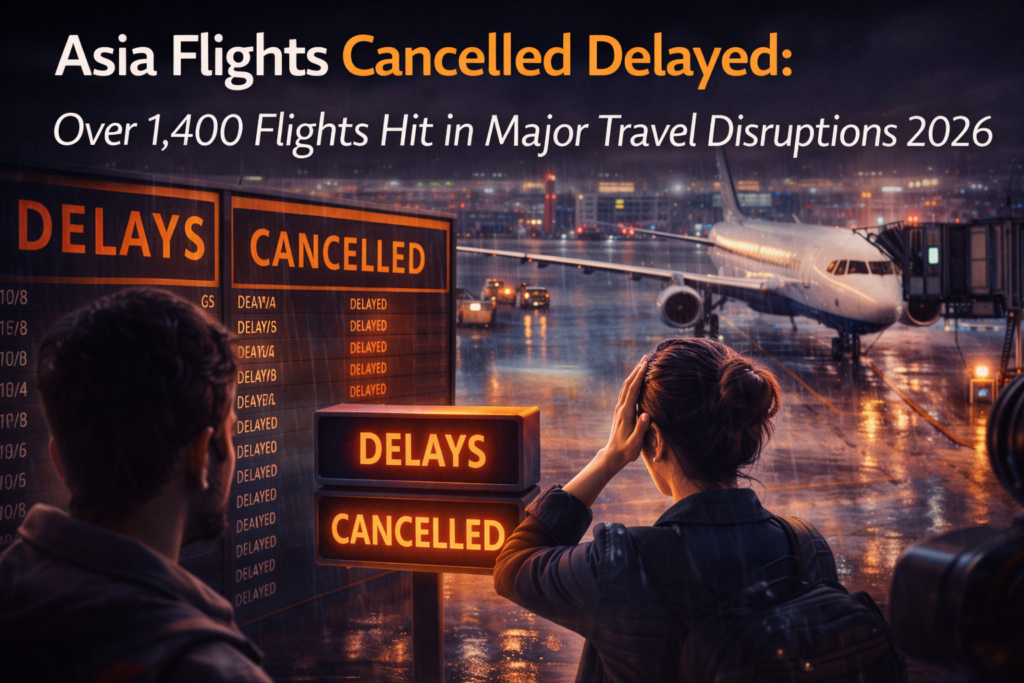
Asia flights cancelled delayed created chaos for thousands of travellers on April 12, 2026. At least 67 flights got cancelled while nearly 1,470 faced delays across major hubs.
Passengers waited in long queues at airports in Delhi, Tokyo, Dubai, Bangkok, Singapore and Jakarta. Missed connections and overcrowded terminals became common.
This disruption hit several countries at once and left many wondering what went wrong.
What Exactly Happened on April 12, 2026
Reports confirm that around 67 flights were cancelled and over 1,400 were delayed in a single day. The numbers come from departure boards and flight tracking data across Asia and the Gulf region.
Major airlines including IndiGo, AirAsia, Japan Airlines, Thai Airways and Etihad felt the impact. Travellers heading to Europe, North America and within Asia faced the worst hit. Check Some relevant Data for Your financial growth.
You can imagine the scene — tired passengers staring at screens that keep showing “Delayed” while kids get restless and plans fall apart.
Asia Flights Cancelled Delayed: Main Airports Affected
Delhi’s Indira Gandhi International Airport saw significant delays. Tokyo (Haneda and Narita), Dubai International, Bangkok’s Suvarnabhumi, Singapore Changi and Jakarta’s Soekarno-Hatta also reported heavy disruptions.
Other affected cities included Beijing, Shanghai, Seoul and Kuala Lumpur. The ripple effect spread quickly because many flights connect through these busy hubs.
Real Reasons Behind Asia Flights Cancelled Delayed
No single cause created this mess. A combination of factors piled up on the same day.
Severe weather played a big role. Thunderstorms, fog and low visibility reduced runway capacity at several airports in East and Southeast Asia.
Air traffic control restrictions and congestion added pressure. Busy airspace with limited buffers meant even small delays turned into hours of waiting.
Geopolitical tensions in West Asia forced some airlines to take longer routes. This increased fuel use and created knock-on delays across the network.
Airport staffing and ground handling issues made recovery slower. When one flight gets delayed, the next one waiting for the same aircraft or crew also gets pushed back.
The logic is simple: modern aviation runs on tight schedules. When weather, congestion and rerouting hit together, the whole system feels the strain.
How Passengers Faced the Chaos
Thousands found themselves stuck at terminals. Some missed connecting flights to long-haul destinations. Others spent extra hours or even the night at airports.
Fares for alternate flights shot up suddenly. Many travellers shared stories of frustration mixed with unexpected kindness from airport staff.
One funny side — a passenger joked on social media that he got to know the airport coffee shop menu better than his own kitchen. But behind the humour, the inconvenience was real.
Impact on Airlines and Operations
Airlines worked hard to rebook passengers and reposition aircraft. Some offered hotel stays or meal vouchers where possible.
The disruption affected both domestic and international routes. Short-haul flights within Asia and connections to the Middle East and Europe suffered the most.
This event shows how interconnected aviation has become. A problem in one hub quickly travels to others.
What Travellers Should Do When Asia Flights Cancelled Delayed
Check your airline app or website regularly before heading to the airport. Keep flight status notifications turned on.
Contact your airline early if you see a delay or cancellation. Ask about rebooking options, meals and accommodation rights.
Carry important documents, medicines, chargers and a change of clothes in your hand luggage. You never know when you might need them.
Travel insurance with good delay and cancellation coverage proves helpful in such situations.
If possible, build some buffer time in your itinerary during peak travel periods or uncertain weather seasons.
Why Such Disruptions Happen More Often
Aviation experts point out that post-pandemic demand grew fast while some infrastructure and staffing took time to catch up.
Seasonal weather patterns in Asia bring thunderstorms and fog regularly. When these coincide with high travel volume, disruptions become likely.
Geopolitical issues add another layer of uncertainty. Airlines must sometimes reroute flights, which affects fuel, crew hours and slot availability.
The good news? Airlines and airports learn from each event and improve coordination over time.
Broader Picture for Asia Travel in 2026
April 2026 saw multiple waves of disruptions across the region. Weather remained the most visible trigger, but operational pressure and external factors played supporting roles.
For business travellers and tourists, flexibility became key. Many started choosing direct routes or adding extra days to their plans.
FAQ: Your Questions Answered
Q: How many flights were affected in the recent Asia flights cancelled delayed event? A: Around 67 flights were cancelled and nearly 1,470 were delayed on April 12, 2026.
Q: Which countries saw the worst impact? A: India, Thailand, Japan, Singapore, Indonesia and the UAE reported major disruptions.
Q: What caused the Asia flights cancelled delayed chaos? A: Severe weather, air traffic congestion, staffing issues and some rerouting due to regional tensions combined to create the disruptions.
Q: Were long-haul flights affected? A: Yes, many passengers missed connections to Europe, North America and other international destinations.
Q: What should I do if my flight gets delayed or cancelled? A: Check your airline app immediately, contact customer service, and ask about rebooking, meals and hotel options.

Ghananand is the Founder & Chief Editor of NewzStrome. Hailing from Prayagraj, Uttar Pradesh, he brings 1.5 years of hands-on experience in journalism and digital media. He delivers sharp, unbiased, and timely news from India and across the globe. Passionate about investigative reporting, technology, politics, and lifestyle, Ghananand is committed to bringing readers nothing but the truth