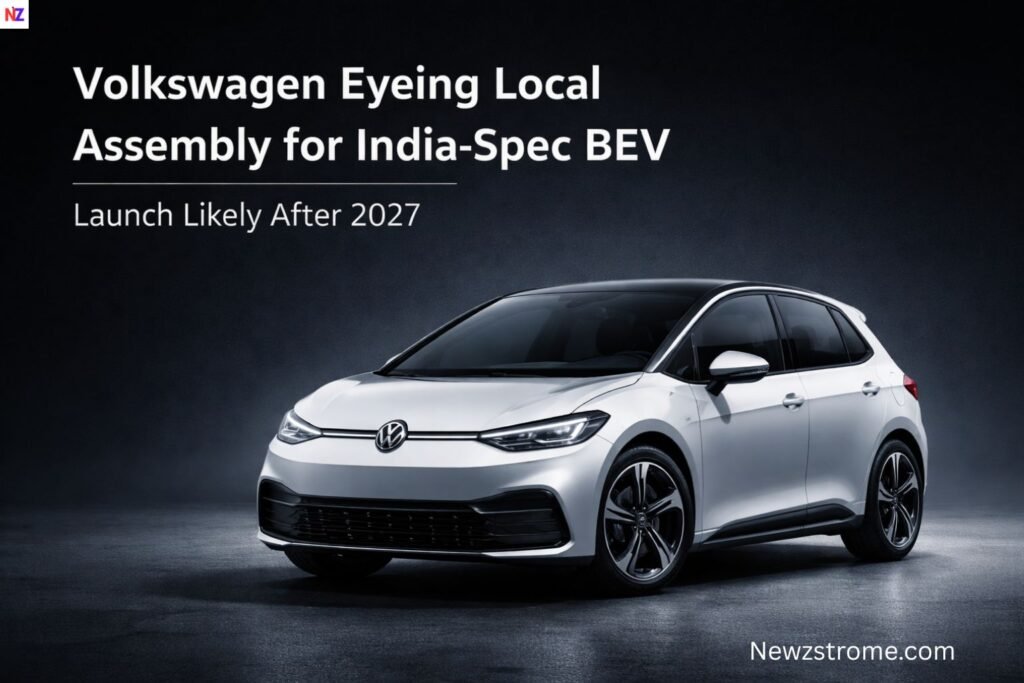
Volkswagen is actively evaluating the local assembly of an India-specific battery electric vehicle (BEV) as part of its long-term electrification strategy for the Indian market. While no specific model has been confirmed yet, the move signals Volkswagen Group’s intent to strengthen its EV presence in one of the world’s most price-sensitive and competitive automotive markets.
The potential India-spec BEV is expected to be launched post-2027, with local assembly planned at the group’s existing manufacturing facility in Chhatrapati Sambhaji Nagar. This plant already assembles vehicles for Skoda, Volkswagen, and Audi, making it a logical choice for future EV operations.
Cost efficiency driving local assembly plans
Volkswagen’s consideration of local assembly is largely cost-driven. The company operates in highly competitive segments in India, where pricing plays a decisive role in long-term success. Importing fully built electric vehicles would significantly increase costs, making it difficult to compete with established and upcoming mass-market EV players.
The automaker has indicated that it is seeking greater clarity on upcoming CAFE (Corporate Average Fuel Efficiency) norms, as well as the Indian government’s long-term stance on taxation for electric and hybrid vehicles. These regulatory factors are expected to play a crucial role in shaping Volkswagen’s final decision on timelines and product positioning.
Although the recently announced Free Trade Agreements (FTAs) could eventually lower costs for imported EVs, industry expectations suggest that the real benefits will only materialise in the longer term. Neither Volkswagen nor its sister brand Skoda appears willing to delay their electric ambitions in India while waiting for those changes to take effect.
Shift in EV segment strategy
Earlier, Volkswagen and Skoda were widely expected to develop an electric vehicle roughly the size of the Taigun or Kushaq, as that segment was gaining traction in India at the time. However, the group has since re-evaluated its approach, adjusting its focus based on evolving market dynamics and pricing realities.
Instead of committing to a single body style or segment, Volkswagen is now keeping its options open, reassessing where a locally assembled BEV could deliver the best balance between affordability, range, and features. This shift reflects the rapid pace at which India’s EV market is changing, with consumer expectations becoming more defined and competition intensifying.
ID.Polo emerges as a strong contender
One of the potential products being discussed within industry circles is the Volkswagen ID.Polo. While not officially confirmed, the model is seen as a strong candidate for India due to its compact size, brand recall, and pricing potential.
The Polo nameplate carries strong legacy value in India, having enjoyed a loyal following over the years. An electric version bearing the ID.Polo badge could help Volkswagen tap into both nostalgia and modern EV appeal. Its dimensions and specifications are also believed to be well-suited to India’s urban-focused EV buyers, making it easier to position competitively against rivals.
Manufacturing at Chhatrapati Sambhaji Nagar
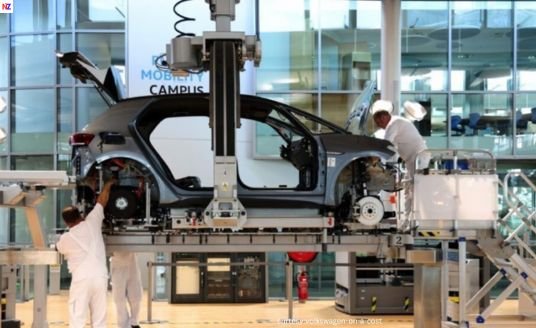
If approved, Volkswagen’s India-spec BEV would be assembled locally at the Chhatrapati Sambhaji Nagar facility. The plant already supports multi-brand production within the Volkswagen Group, offering flexibility and economies of scale.
Local assembly would allow Volkswagen to better manage costs, respond faster to market demand, and potentially increase localisation over time. This approach aligns with the broader industry trend, as more global automakers look to assemble or manufacture EVs in India rather than rely solely on imports.
Part of a broader VW Group EV strategy
Volkswagen’s plans mirror earlier comments made by Skoda in 2024, when the brand confirmed it was also studying local assembly for its future electric offerings in India. Together, these developments highlight the Volkswagen Group’s measured but committed approach to electrification in the country.
Rather than rushing into the market, the group appears focused on getting the pricing, regulations, and product fit right before launching its BEVs. This cautious strategy may delay launches but could improve long-term viability in a market where margins are tight and customer expectations are high.
With regulatory clarity expected over the next few years and EV adoption steadily rising, Volkswagen’s locally assembled BEV could mark a significant milestone in the brand’s India journey—provided the execution aligns with the market’s evolving needs.