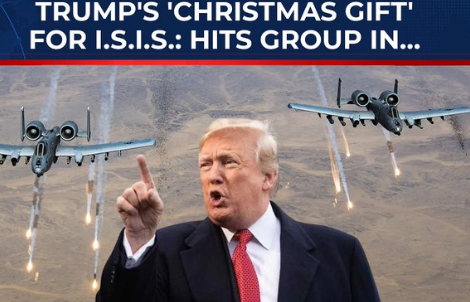
On Christmas evening, the United States military, with permission from Nigeria’s government, launched airstrikes in Nigeria. The target was a faction linked to the Islamic State (ISIS). President Trump announced this online, calling it a “powerful and deadly” strike against militants he accused of specifically targeting and killing Christians. While details are scarce—we don’t know how many fighters were hit or the exact damage—the key point is this was a joint operation. The U.S. and Nigeria worked together, sharing intelligence and coordinating the attack.
Nigeria's Messy Security Crisis
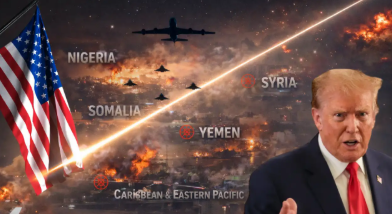
To understand why this happened, you need a picture of Nigeria’s chaos. The country isn’t fighting just one enemy; it’s dealing with a bunch of armed groups all at once. You might have heard of Boko Haram in the northeast. Well, a part of that group split off and now pledges loyalty to ISIS, calling itself “Islamic State West Africa Province.” They’re a major problem.
But these new strikes happened in the northwest, in a state called Sokoto. That area is plagued by different violent gangs. One of them is known as the Lakurawa group, which is also linked to ISIS. These gangs aren’t just robbing people; they’re ideologically driven, aiming to control territory. They hide in vast forests where the Nigerian government’s reach is weak. Security experts think the U.S. strike was likely aimed at this Lakurawa group, which has been getting more violent, attacking remote villages and security posts.
The Sensitive Issue of Religion
Here’s where things get politically heated. President Trump framed this strike as a direct response to the killing of Christians. He’s been accusing Nigeria’s government for weeks of not protecting its Christian communities. The U.S. has taken steps like restricting visas for Nigerians believed involved in such violence and labeling Nigeria a “country of particular concern” for religious freedom.
Nigeria is almost evenly split between Christians (mostly in the south) and Muslims (mostly in the north). The violence from groups like Boko Haram and ISIS affiliates hits everyone. They have killed thousands of Muslims who don’t agree with their extreme views. Attacks by other armed groups, like herdsmen clashing with farmers over land, also don’t pick sides based only on religion; they create general terror.
Nigeria’s government has pushed back against Trump’s focus, saying correctly that people of all faiths are victims. Calling it solely a “Christian persecution” issue oversimplifies a messy conflict and can even stir up more religious tension within Nigeria.
The Bigger Picture of U.S. Involvement
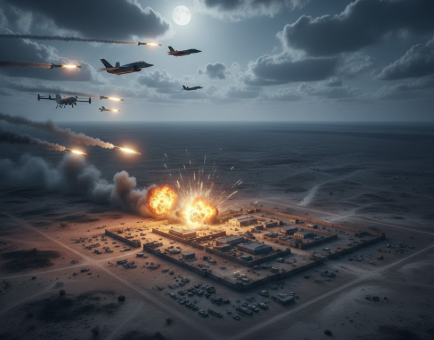
This strike is part of a bigger shift. The U.S. has actually been reducing its military presence in Africa in recent years. So, getting involved like this is a notable move. It seems Trump is making a point. Last month, he told the Pentagon to start planning how to address the violence in Nigeria. This Christmas strike appears to be the first public action from that order.
It’s a delicate dance. The U.S. needs Nigeria’s cooperation—you can’t just fly bombers into another country’s airspace without permission. Nigeria, while accepting help, is very sensitive about its sovereignty. Their statement stressed that this was done with “mutual respect.” They want the world to see them as a partner, not a helpless victim.
So, what we’re seeing is a partnership born of necessity. Nigeria is struggling to control its vast territory and multiple crises. The U.S., led by a president focused on Christian persecution, sees an opportunity to hit ISIS and make a symbolic stand. Defense Secretary Hegseth’s comment, “More to come…” suggests this might not be a one-time event.
The Bottom Line
In simple terms: The U.S. and Nigeria teamed up to bomb an ISIS-linked hideout in northwest Nigeria. The trigger was a rising wave of brutal attacks, which the U.S. president views through a lens of religious persecution, though the violence affects Nigerians of all faiths. This action is a sign of the U.S. flexing its military muscle on a specific issue it cares about, while navigating a complex partnership with a giant African nation drowning in insecurity. It solves a immediate tactical problem—taking out some fighters—but doesn’t address the root causes of Nigeria’s instability: lack of governance, poverty, and multiple, overlapping conflicts. For the people in Sokoto, it might bring a brief respite, but the fear and the underlying problems will likely remain.