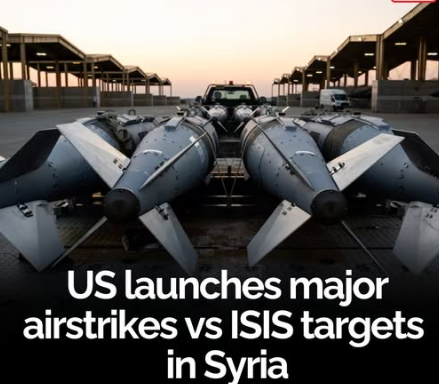
The major U.S. airstrikes in Syria in December 2025, dubbed “Operation Hawkeye Strike,” were a direct and large-scale military response to a deadly attack on American personnel. The operation, which involved coordinated efforts with Jordan and a notable shift in cooperation with Syria’s new government, highlights the persistent threat of ISIS and evolving geopolitical alliances in the region.
The Attack that Triggered a Response
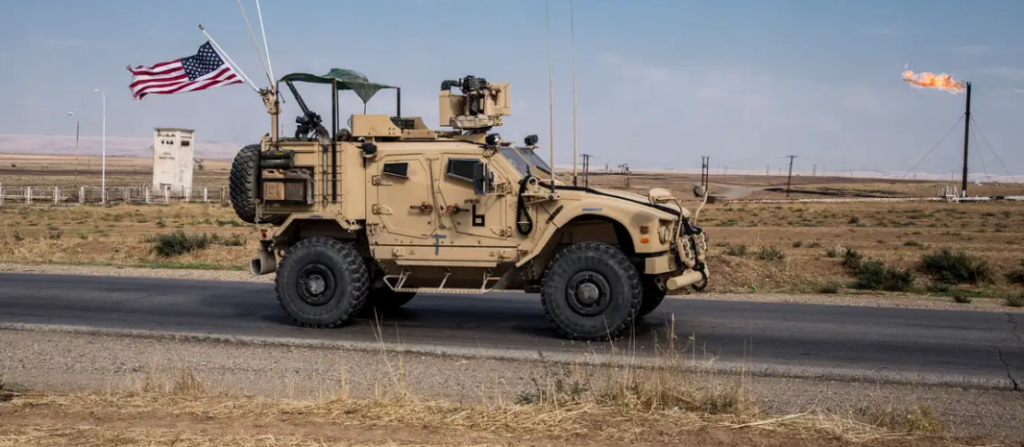
The chain of events began on December 13, 2025, near the historic city of Palmyra. A meeting between U.S. and Syrian security officials was ambushed by a lone gunman. The attack resulted in the deaths of two Iowa National Guardsmen and a civilian interpreter, and wounded three other U.S. troops.
Although the Islamic State (ISIS) did not formally claim responsibility, U.S. and Syrian assessments pointed to the group. The gunman was reportedly a recent recruit to the Syrian security forces who was under investigation for suspected ISIS ties. These were the first U.S. combat deaths in Syria since the fall of the long-time dictator Bashar al-Assad a year earlier, adding significant weight to the incident.
President Trump’s response was swift and personal. He attended the “dignified transfer” of the fallen Americans’ remains at Dover Air Force Base, calling it a “beautiful event for three great people“. Publicly, he vowed “serious retaliation,” pledging to hit ISIS back “hard“.
Operation Hawkeye Strike: A "Declaration of Vengeance"
The promised retaliation, named Operation Hawkeye Strike, was launched on December 19, 2025. U.S. Central Command described a massive application of force, using F-16 and A-10 fighter jets, Apache attack helicopters, and HIMARS artillery systems to fire more than 100 precision munitions.
The strikes targeted over 70 ISIS sites across central Syria, including weapons storage areas, infrastructure, and operational headquarters in provinces like Deir Az Zor, Raqqa, and near Palmyra. The goal was to cripple the group’s ability to regenerate and launch attacks.
A critical feature of this operation was international cooperation. The Royal Jordanian Air Force participated with its own fighter aircraft. Jordan’s involvement was strategic; the country has been deeply affected by terrorism and seeks to prevent extremist groups from using southern Syria as a safe haven.
A Shifting Political Landscape in Syria
Perhaps the most significant geopolitical aspect of these strikes was the position of Syria’s government. Following the ouster of Bashar al-Assad in late 2024, the new interim government led by President Ahmad al-Sharaa has sought international rehabilitation.
The Syrian Foreign Ministry stated the country was “steadfast” in fighting ISIS and would intensify operations. Notably, President Trump stated that the Syrian government was “fully in support” of the U.S. strikes—a dramatic shift from years of hostility. This collaboration suggests a tentative, interest-based alignment between Washington and Damascus against their common enemy, ISIS.
The Aftermath and Enduring Challenge
In the immediate aftermath, war monitors reported at least five ISIS members killed. U.S. Defense Secretary Pete Hegseth framed the action not as the start of a new war, but as a “declaration of vengeance” for the lost Americans. He warned, “we will continue”.
This event underscores a persistent reality: while ISIS lost its territorial “caliphate” in Syria in 2018, it remains a deadly, dispersed insurgent force. The group has shown a persistent ability to regroup in remote areas like the Syrian desert and launch attacks. The U.S., with approximately 1,000 troops in Syria, remains engaged in a long-term, low-profile counterterrorism mission against this resilient threat.
Operation Hawkeye Strike is a vivid example of how a single, tragic event can trigger a significant military escalation. It also reveals how counterterrorism objectives can forge unexpected, temporary alliances in the complex theater of Middle Eastern politics, as former adversaries find common cause against a shared terrorist threat.