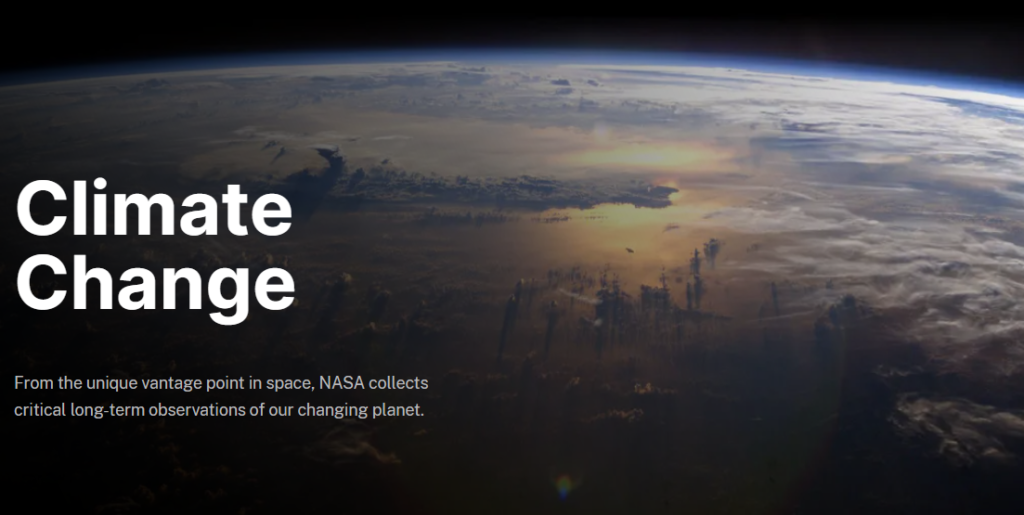
Imagine you’re in a plane, flying so high that the sky turns dark blue and the curve of the Earth is visible below you. That’s where NASA is flying right now, on a special mission that feels like a high-tech treasure hunt. But they’re not looking for gold or jewels in the traditional sense. They’re searching for the hidden ingredients that make our modern world work—the minerals inside your phone, your electric car, and the solar panels on rooftops.
This is the story of a special camera, a soaring airplane, and a map of America that’s being drawn in invisible light to secure our future.
Why Are We Hunting Rocks?
Let’s start with the “why.” Our lives run on technology. Your smartphone, the battery in an electric vehicle, the satellites guiding our weather forecasts, and the systems that power the military all need specific minerals to work. We’re talking about things like lithium, cobalt, graphite, and rare earth elements.
Here’s the catch: the United States doesn’t produce enough of these “critical minerals” itself. We have to buy them from other countries, some of which are not always friendly partners. This puts our economy and national security in a tricky spot. If the supply gets cut off or becomes too expensive, everything from making new cars to building defense tech gets harder and costlier.
So, the mission is clear: we need to find more of these minerals right here at home. But you can’t just go digging randomly. That’s expensive and messy. You need a guide. You need a treasure map. And that’s exactly what NASA and the U.S. Geological Survey (USGS) are creating together.
The Magic Camera in the Sky
This is where the cool gadget comes in. Tucked inside the nose of a slender, white ER-2 research plane—a craft that can fly almost to the edge of space—is a sensor called AVIRIS-5. Think of it not as a camera, but as a super-powered light reader.
Here’s how it works in simple terms: Every type of rock or mineral has its own unique “fingerprint.” This fingerprint isn’t something you can touch; it’s made of light. When sunlight hits the ground, different minerals absorb and reflect that light in different, specific patterns. Our eyes only see basic colors, but AVIRIS-5 can see hundreds of subtle shades of color that are invisible to us, especially in the infrared spectrum.
As the plane flies over the deserts and mountains of the American West, this sensor scans the ground, reading those light fingerprints. It’s constantly asking, “What are you made of?”
The Great Desert Hunt
You might wonder why they’re flying over deserts. It’s practical: in places like Nevada or Arizona, there’s less grass, fewer trees, and less soil covering the bones of the Earth. The geology is right out in the open, making it easier for the sensor to get a clear reading of the rocks.
This joint project, called GEMx, has been sweeping over vast areas since 2023—covering hundreds of thousands of square miles. They’re not finding ready-made mines from the air. Instead, they’re creating incredibly detailed maps that say, “Look closer here.” These maps will guide geologists on the ground to the most promising spots, saving immense time, money, and disturbance to the land.
It’s a smarter, more efficient way to search. Before you bring in the big drills, you send up the smart camera.
More Than Just a Mineral Map
The neatest part of this story is that this technology has a foot in two worlds: ours and the cosmos. NASA’s Jet Propulsion Laboratory has been making spectrometers like this for decades to study other planets. Versions of this tool have mapped the rust-colored surface of Mars, scanned Mercury, and even analyzed the icy heart of Pluto. There’s one right now, hurtling through space toward Jupiter’s moon Europa, where it will look for signs of ingredients that could support life.
And back on Earth, its potential is just exploding. As scientist Dana Chadwick said, finding minerals is just the beginning. This same tool can measure the water content in a mountain snowpack, helping farmers and cities plan their water use for the year. It can assess how dry a forest is, giving firefighters a warning about extreme wildfire risk. It can monitor crop health or track environmental damage.
So, this high-altitude treasure hunt is about much more than just rocks. It’s about using a brilliant piece of technology—born from our desire to explore other planets—to solve big problems right here at home. It’s about making our country more secure, our technology more sustainable, and our understanding of the planet more complete.
It all starts with a plane in the quiet, thin air 60,000 feet up, a camera that sees invisible colors, and a quest to find the hidden pieces of our future.