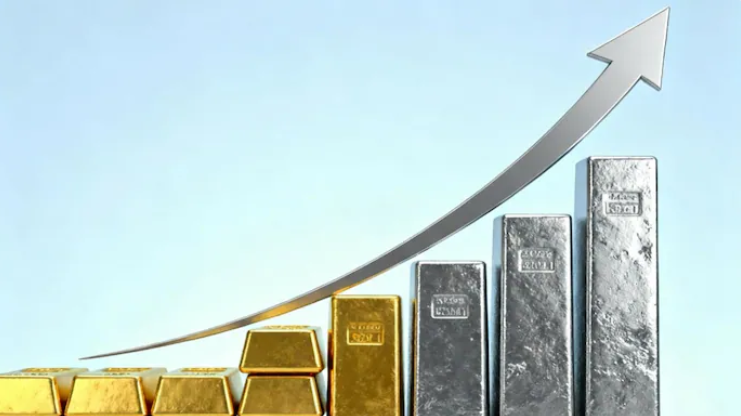
The recent ascent in the price of silver, often referred to as “poor man’s gold,” is a complex phenomenon driven by a powerful confluence of macroeconomic, industrial, and market-specific factors. While gold often steals the headlines in the precious metals space, silver’s surge is arguably more fascinating due to its dual identity as both a monetary metal and a critical industrial commodity.
1. The Monetary & Safe-Haven Driver: Inflation and Currency Debasement
At its core, silver retains a millennia-old role as a store of value. In periods of economic uncertainty and monetary expansion, investors flock to tangible assets.
- Inflation Hedge: Persistent, elevated inflation erodes the purchasing power of fiat currencies. When real interest rates (nominal rates minus inflation) are deeply negative, as they have been, holding cash becomes costly. Hard assets like silver historically preserve wealth during such times. While central banks have raised rates to combat inflation, the concern that “higher for longer” rates could trigger a recession sustains demand for defensive assets.
- Currency Debasement and Debt Concerns: Unprecedented fiscal stimulus and soaring national debts across major economies, particularly the US, lead to fears of long-term currency debasement. Silver, with its finite supply, is seen as a hedge against this systemic risk. Investors are not just buying silver; they are selling exposure to what they perceive as over-printed money.
- Geopolitical Turmoil: The war in Ukraine, tensions in the Middle East, and strategic competition between the US and China create a fraught global landscape. Geopolitical instability drives capital into perceived safe havens. Silver benefits from this flight to safety, albeit to a lesser extent than gold, with the two metals’ prices often exhibiting a strong positive correlation.
2. The Industrial Demand Driver: The Green Energy Revolution
This is where silver’s story dramatically diverges from gold’s and represents its most potent bullish case for the 21st century. Silver is the most conductive and reflective metal on Earth, making it irreplaceable in numerous key technologies.
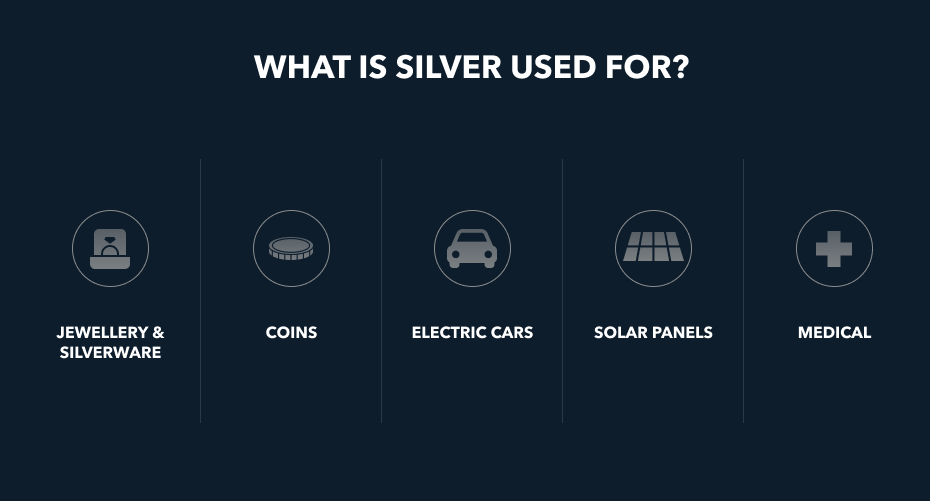
- Solar Photovoltaics (PV): This is the single largest and fastest-growing industrial demand segment. Silver paste is a critical component in over 90% of solar cells. As the global push for decarbonization accelerates, governments worldwide are committing to massive solar energy expansion. The International Energy Agency (IEA) continually revises solar installation forecasts upward. Every new gigawatt of solar capacity requires a significant amount of silver, creating a structural, inelastic demand base that is resistant to price swings.
- Electric Vehicles (EVs) and Charging Infrastructure: An average EV uses significantly more silver than a conventional internal combustion engine vehicle—around 25-50 grams, compared to 15-28 grams. Silver is essential in electrical contacts, battery management systems, and even in the charging stations themselves. The global EV fleet is expected to grow exponentially over the next decade, providing another relentless demand stream.
- 5G and Electronics: The rollout of 5G networks requires extensive new infrastructure, including advanced semiconductors and RF connectors where silver is vital. Furthermore, the proliferation of Internet of Things (IoT) devices, smartphones, and consumer electronics all consume silver in their circuitry. This demand is ubiquitous and growing.
- Medical and Biocidal Applications: Silver’s antimicrobial properties have found renewed importance in healthcare settings, coatings, and consumer products, a trend accelerated by the COVID-19 pandemic
This robust industrial demand profile means silver is not merely a passive financial asset. It is a crucial raw material in the most critical technological transitions of our time, tying its fundamental outlook directly to global growth in green tech and electrification.
3. The Supply Constraint Driver: Stagnant Production and Deficits
Demand is only one side of the equation; supply is struggling to keep pace.
- Persistent Market Deficits: For several consecutive years, the physical silver market has been in a structural deficit, where total industrial and investment demand exceeds total supply from mines and recycling. These deficits are drawn from above-ground stockpiles (like exchange inventories), which are being steadily depleted.
- Mining Challenges: Silver is rarely mined as a primary product; over two-thirds is produced as a by-product of mining for zinc, lead, copper, and gold. Therefore, silver supply is often inelastic to its own price. Decisions to open or expand mines are driven by the economics of the primary metals. Additionally, years of underinvestment in exploration, declining ore grades, rising energy and labor costs, and lengthening permitting timelines constrain new supply.
- Recycling Limitations: While recycling is a component of supply, it is relatively price-inelastic in the short term. The vast majority of industrial silver is used in minute, disseminated amounts in products that are not economically recyclable for their silver content alone.
4. The Investment & Market Dynamics Driver
Financial markets amplify the fundamental trends.
- Exchange-Traded Funds (ETFs): Massive inflows into physically-backed silver ETFs, such as iShares Silver Trust (SLV), represent direct institutional and retail buying of bullion, removing large quantities of metal from the available market. These holdings are a visible barometer of investment sentiment.
- Futures Market Positioning: On the COMEX, the world’s leading silver futures exchange, periods where managed money (hedge funds) establish large net-long positions often coincide with sharp price rallies. These speculative flows can create and accelerate short-term price momentum.
- Retail Frenzy and “Silver Squeeze”: Following the GameStop episode, online communities have periodically targeted silver, promoting the idea of a physical short squeeze against perceived paper market manipulation by large banks. While the direct market impact is debated, these campaigns have undeniably driven retail coin and bar demand to record levels, further straining physical supply channels and creating localized premiums.
5. The Gold-Silver Ratio and Catch-Up Potential
Traders closely watch the gold-silver ratio (the number of ounces of silver needed to buy one ounce of gold). Historically, this ratio averages around 60:1 but has often spiked higher during economic stress (favoring gold) before mean-reverting. The ratio has frequently been above 80:1 in recent years. Many investors see a high ratio as an indicator that silver is undervalued relative to gold. As sentiment improves in the metals complex, a declining ratio—where silver outperforms gold—can become a self-fulfilling prophecy, drawing in momentum-based technical buying.
Conclusion: A Perfect Storm
The increase in the silver price is not due to a single factor but rather a “perfect storm” of interdependent drivers. The green energy revolution provides an explosive, structural demand story for the long term. Macroeconomic fears of inflation and currency debasement underpin its monetary appeal. Chronic supply deficits highlight the physical market’s tightness. Finally, financial market dynamics—from ETF inflows to speculative positioning—add volatility and momentum.
Disclaimer:
This narrative is solely intended for educational reasons. The opinions and suggestions are not those of Mint, Before making any financial decisions, we suggest investors to speak with qualified specialists. ( THIS POST IS FOR EDUCATIONAL PURPOSE ONLY)
Pingback: Will Gold Really Hit ₹2 Lakh? The Debt-Fueled Forecast