
Samsung’s next-generation foldable smartphone could mark a meaningful step forward in display technology. Fresh industry reports suggest that the Galaxy Z Fold 8 may adopt a dual ultra-thin glass (UTG) OLED panel, a move aimed squarely at reducing the visibility of the crease — one of the most common complaints about foldable phones.
The development follows Samsung Display’s showcase at CES 2026, where it unveiled a near crease-free foldable OLED panel. The demo hinted at how internal structural changes, rather than cosmetic tweaks, could dramatically improve the everyday experience of foldable devices.
Dual Ultra-Thin Glass: What’s Changing
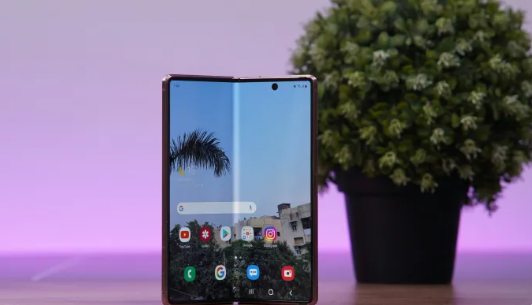
Until now, most foldable displays have relied on a single layer of ultra-thin glass positioned on the top cover window. According to industry sources, Samsung Display is now experimenting with UTG layers on both the top and bottom of the OLED panel. This dual-layer approach is said to cut crease depth by roughly 20 percent compared to the Galaxy Z Fold 7.
The idea is simple but effective: distributing pressure more evenly across the display when the phone folds and unfolds, rather than allowing stress to concentrate along a single hinge line.
Internal Structure Gets a Rethink
Beyond the glass itself, Samsung Display is reportedly reworking the internal architecture of the foldable panel. Improvements are said to include refined lamination techniques, better light diffusion layers, and a redesigned backplate that supports the display.
One notable change under consideration is the use of a laser-drilled backplate with microscopic holes. These allow mechanical stress to spread more evenly during repeated folding, which could help slow down crease formation over time and improve long-term durability.
Different Approaches for Samsung and Apple
While Samsung Display is expected to supply foldable OLED panels to both Samsung Electronics and Apple, the final designs may not be identical. Reports suggest Apple is leaning toward a glass-based support structure, whereas Samsung may stick with a laser-drilled metal plate to strike a balance between flexibility and strength.
These differences could mean that crease behaviour — and how it evolves with long-term use — varies between foldable phones from the two brands.
Why Ultra-Thin Glass Still Makes Sense
Earlier rumours linked the dual UTG approach mainly to Apple’s first foldable iPhone. However, sources now say Samsung Electronics is seriously considering the same solution for its future Galaxy Fold models.
Ultra-thin glass remains an attractive option because it is proven, scalable, and cost-effective compared to experimental materials. Its wider adoption could also make advanced foldable displays more consistent across brands and price segments.
What This Means for Foldable Phones
If these changes make it into the Galaxy Z Fold 8, users could see a noticeably smoother display with a less distracting crease, improved durability, and better visual consistency over time. While Samsung has not officially confirmed any of these details, the direction is clear: foldables are steadily moving closer to feeling like normal smartphones — just with much bigger screens.
As competition intensifies and Apple prepares its own foldable entry, display innovation may become the biggest battleground in the next phase of foldable evolution.