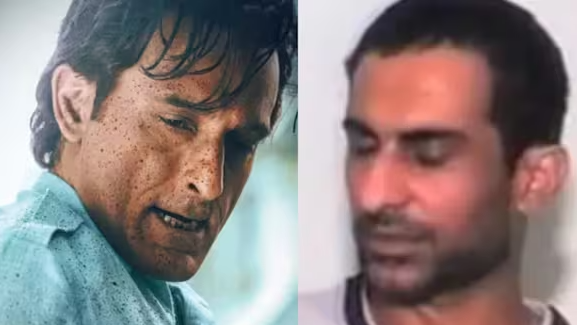
We all love a good gangster drama, don’t we? The swagger, the power, the moral ambiguity. But what if I told you the most compelling gangster story isn’t on a screen—it’s etched in the bloody history of a neighborhood called Lyari in Karachi. This is the tale of Rahman Dacoit. A name that was a curse on some lips and a prayer on others. A man who wasn’t just a criminal; he was an era, a system, and a terrifying answer to a failed state.
And now, with Akshaye Khanna set to portray him in the upcoming film Dhurandhar, the legend is back in the spotlight. But the real story is far more complex, more human, and infinitely more cautionary than any movie could capture.
Lyari: The Stage Where Dreams and Desperation Collide
To understand Rahman, you must first understand Lyari. Imagine a place once celebrated for its vibrant culture—the heart of football in Pakistan, home to soulful music and fierce community spirit. Now, layer that with the harsh realities of the 70s and 80s: poverty, political neglect, and limited options. For young boys here, the paths were stark: become a football star, a daily wage laborer, or a goonda.
This was the cradle Rahman was born into. His fuel wasn’t ambition for luxury; it was a volcanic rage against circumstance. At just 13, he committed his first murder. Not over some grand drug deal, but a trivial street fight. This is key—Rahman’s violence was never just business. It was personal, impulsive, and terrifyingly absolute.
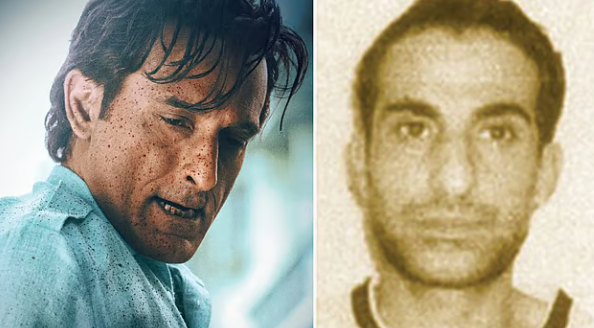
The Rise: From Street Fighter to Shadow Prime Minister
Most gangsters stop at building a gang. Rahman Dacoit built a parallel government. After a brutal betrayal by his own mentor, he learned that in this world, you trust no one. So, he created his own world.
He didn’t just collect hafta (protection money). He instituted systems. Need a water connection for your home? You needed Rahman’s “permit.” Running a tea stall? You paid tax to his “municipality.” He controlled every street, every tap, every shadow. In the complete vacuum of official governance and justice, Rahman became the law—a ruthless, capricious, but undeniably present authority.
The Breathtaking Contradiction: The Ruthless Don & The Robin Hood
This is where the story twists, and where Rahman transcended being a mere villain. The same man who orchestrated kidnappings and murders was also the unofficial social worker of Lyari.
- A family couldn’t afford a daughter’s wedding? Rahman Bhai would send the money.
- Someone was hospitalized with crippling bills? His men would settle it.
- The local football tournament needed funding? He was the chief sponsor.
To the poor and powerless, he was a messiah in a leather jacket. He gave them a twisted sense of security and patronage when the state offered them nothing. This duality is what makes him a fascinating, tragic figure. He was both the disease and the relief—exploiting the very community he was seen to protect. He proved that people will pledge allegiance to the devil himself, if he’s the only one who shows up when they’re in need.
The Descent into Hell: Feuds, Footballs, and a Final Nightmare
No empire lasts forever, especially one built on sand and blood. Rahman’s story is interlocked with bitter rivals like Arshad Pappu, leading to a feud of Shakespearean brutality involving grave desecrations and phone-call murders.
Rahman eventually fell to a police encounter. But his death unleashed a new, even more savage chapter. His protégé-turned-rival, Uzair Baloch, sought to cement his power in the most horrifying way imaginable. In 2013, Arshad Pappu was captured, beheaded, and his head was kicked through the streets of Lyari like a football by a frenzied mob.
This wasn’t just a gang killing. It was the complete moral annihilation of a community. It showed how the culture of violence Rahman helped normalize had mutated into something sub-human. The very football fields that were Lyari’s pride had become arenas of unspeakable horror.
The Uncomfortable Lesson Rahman Dacoit Leaves Behind
Rahman Dacoit is not a hero to be celebrated. He is a symptom to be studied. His life is a dark mirror held up to society, asking us uncomfortable questions:
His story warns us that the vacuum of power and dignity will always be filled. Sometimes, it’s filled by a man in a suit from a political party. Sometimes, it’s filled by a man with a gun and a twisted code of honor.
Akshaye Khanna’s film will dramatize the swagger and the shootouts. But the real takeaway is quieter and more profound. Rahman Dacoit reminds us that the most dangerous monsters aren’t born in a vacuum; they are bred, nurtured, and empowered by a broken world. He was Lyari’s creation as much as he was its curse.