The year 2025 has been one of the most eventful—and divisive—in OnePlus’ history. On paper, the company appeared busier than ever, launching close to a dozen devices across different segments and markets. But beneath the surface, this was also the year when many long-time fans began questioning the brand’s direction.
While some launches showcased flashes of OnePlus’ old brilliance, others felt like compromises that diluted what the brand once stood for. More worryingly, these decisions hint at a deeper strategic shift—one that may not align with the expectations of the very audience that helped OnePlus grow into a global name.
Loser: OnePlus Open 2 – A Promise Broken Too Soon
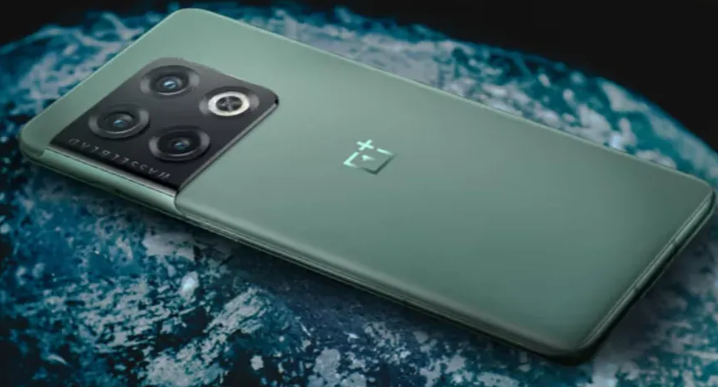
The year began on a disappointing note when OnePlus officially scrapped its foldable smartphone plans for 2025. The cancellation of the OnePlus Open 2 came as a shock, especially considering how successful the original OnePlus Open from 2023 had been.
That first foldable wasn’t just good “for a foldable.” It was a genuinely excellent smartphone—thin, powerful, well-designed, and refined. Expectations were high for its successor, which was widely believed to be a rebranded version of the Oppo Find N5.
However, while Oppo went ahead with its foldable launch, OnePlus quietly stepped away. The Open 2 was shelved, and the brand’s foldable roadmap was placed on indefinite hold. At the time, it seemed like a one-off decision. In hindsight, it was the first visible sign of a larger pattern—OnePlus slowly stepping back from competing at the very top.
Winner: OnePlus 13s – Compact Flagship Done Right
Thankfully, not everything went wrong. The OnePlus 13s emerged as one of the brand’s most impressive releases in recent years.
For a long time, smartphone buyers had to compromise—compact phones lacked battery life, powerful phones were bulky, and long-lasting phones were rarely small. The OnePlus 13s broke that cycle. It delivered flagship-grade performance, a compact design, and strong battery life in a single package.
That said, it wasn’t perfect. The cameras, in particular, felt closer to mid-range than flagship, and some premium features were missing. But crucially, OnePlus didn’t price it like a full-blown flagship either. This balance made the 13s an attractive option, especially for users who value performance and ergonomics over camera bragging rights.
The biggest drawback? Availability. The phone was limited to India, while its sibling—the OnePlus 13T—remained exclusive to China. Why such a capable device wasn’t launched globally remains one of the year’s unanswered questions.
Loser: Nord 5 – A Step Back in Design Identity
The Nord 4 was widely praised for its bold and refreshing design. Its aluminum unibody construction stood out in a market flooded with flat-sided glass slabs. It felt intentional, premium, and different—qualities OnePlus once championed.
Which is why the Nord 5 felt so confusing.
Instead of building on that identity, OnePlus replaced it with a flat, plastic design that looked generic and uninspired. The downgrade was hard to ignore. While the Nord 5 did improve in areas like battery life and internal specs, the loss of design character overshadowed those gains.
Smartphones don’t all need to look the same. In fact, OnePlus once thrived by doing things differently. Moving from a distinctive aluminum build to a plastic body felt less like cost-cutting and more like abandoning creativity altogether.
The Nord 4 was widely praised for its bold and refreshing design. Its aluminum unibody construction stood out in a market flooded with flat-sided glass slabs. It felt intentional, premium, and different—qualities OnePlus once championed.
Which is why the Nord 5 felt so confusing.
Instead of building on that identity, OnePlus replaced it with a flat, plastic design that looked generic and uninspired. The downgrade was hard to ignore. While the Nord 5 did improve in areas like battery life and internal specs, the loss of design character overshadowed those gains.
Smartphones don’t all need to look the same. In fact, OnePlus once thrived by doing things differently. Moving from a distinctive aluminum build to a plastic body felt less like cost-cutting and more like abandoning creativity altogether.
Winner: Nord CE5 – Simple, Tasteful, and Surprisingly Likeable
Nord CE phones have traditionally been forgettable. Affordable? Yes. Memorable? Rarely.
That changed with the Nord CE5.
Against all expectations, this phone turned out to be one of the most visually appealing OnePlus devices of 2025. Its clean, understated design—especially in the blue colorway—felt elegant rather than cheap. There was no unnecessary flair, but also no sense of compromise.
Interestingly, many users found themselves gravitating toward the CE5 over the more powerful Nord 5. That alone says a lot. The CE5 may not dominate spec sheets, but it succeeds where it matters most—it feels good to use and good to own.
In a lineup where excess has become common, simplicity worked in its favor.
Loser: OnePlus 15 – A Flagship That Went Backwards
The OnePlus 13 was widely regarded as one of the best Android phones of its generation. Even a year later, it remains a strong recommendation. So expectations for the OnePlus 15 were understandably high.
Unfortunately, it failed to meet them.
In several key areas, the OnePlus 15 was objectively worse than its predecessor. The display quality dropped. The camera system regressed. Even the haptic feedback—something OnePlus has historically excelled at—took a hit. The design, meanwhile, felt uninspired, resembling a rough imitation of an iPhone rather than a confident evolution.
What made matters worse was the pricing. Asking more money for a phone that delivers less in core areas is a hard sell, no matter how good the performance improvements may be. Incremental upgrades are acceptable. Clear downgrades are not.
The OnePlus 13 was widely regarded as one of the best Android phones of its generation. Even a year later, it remains a strong recommendation. So expectations for the OnePlus 15 were understandably high.
Unfortunately, it failed to meet them.
In several key areas, the OnePlus 15 was objectively worse than its predecessor. The display quality dropped. The camera system regressed. Even the haptic feedback—something OnePlus has historically excelled at—took a hit. The design, meanwhile, felt uninspired, resembling a rough imitation of an iPhone rather than a confident evolution.
What made matters worse was the pricing. Asking more money for a phone that delivers less in core areas is a hard sell, no matter how good the performance improvements may be. Incremental upgrades are acceptable. Clear downgrades are not.
Winner: OnePlus 15R – Practical Improvements Where It Counts
Initially, the OnePlus 15R didn’t inspire much confidence. The removal of the telephoto lens raised eyebrows, and the design felt unfinished.
But once you looked past first impressions, the phone revealed its strengths.
Performance saw a noticeable boost. Battery life improved significantly. The fingerprint sensor was faster and more reliable, the speakers were better, and the overall build quality felt more refined. The main camera, supported by an upgraded image processing engine, performed well enough for most users.
Yes, the ultra-wide camera remained underwhelming, but the overall package made sense—especially at its price point. Unlike the OnePlus 15, the 15R felt like a genuine step forward.
Bonus Loser: OnePlus as a Brand
The biggest loser of 2025 may not be a single device, but OnePlus itself.
Over the years, OnePlus built a reputation as a brand that delivered flagship experiences without unnecessary excess. In 2025, that vision seemed blurred. Foldables were paused. The Hasselblad partnership was dropped. The numbered flagship line was repositioned toward gaming-centric hardware, sacrificing balance for niche appeal.
Meanwhile, Oppo—OnePlus’ parent brand—appeared to receive preferential treatment. Oppo retained the foldable spotlight, the Hasselblad collaboration, and full-fledged premium flagships. The contrast was impossible to ignore.
The irony is that despite these advantages, Oppo has struggled to gain the same premium recognition in Western markets that OnePlus enjoys. OnePlus still holds mindshare, loyalty, and cultural relevance—but those advantages are not infinite.
Undermining a successful brand to elevate another rarely ends well. It’s like fixing a weak limb by injuring a strong one—it doesn’t solve the problem, it just creates a bigger one.
Final Thoughts: Where Does OnePlus Go From Here?
Perhaps 2025 was an anomaly. Perhaps the real flagship and foldable comeback is just around the corner. Or perhaps this year marked the beginning of a slow identity shift—one where OnePlus moves away from being a true premium contender.
Only time will tell.
But if you’re a long-time OnePlus fan, the signs are hard to ignore. Brands thrive when they listen to their community, not when they sideline it. The original OnePlus motto wasn’t just marketing—it was a promise.
And if that promise still means something, 2026 needs to be the year OnePlus proves it.