
Celebrity separations often arrive wrapped in speculation, blame, and public scrutiny. Headlines usually look for fault lines—who hurt whom, what went wrong, and whether reconciliation is possible. Against this familiar backdrop, television actors Mahhi Vij and Jay Bhanushali chose a strikingly different path.
After 14 years together, the couple announced their separation through a joint statement that emphasised mutual respect, emotional clarity, and shared responsibility as parents. Instead of conflict, their message focused on calm decision-making and the idea of choosing peace over drama—a phrase that has since resonated widely with audiences.
Their announcement did more than confirm the end of a marriage. It opened up a broader conversation about how separations can be handled with dignity, especially when children are involved.
A Statement That Changed the Tone
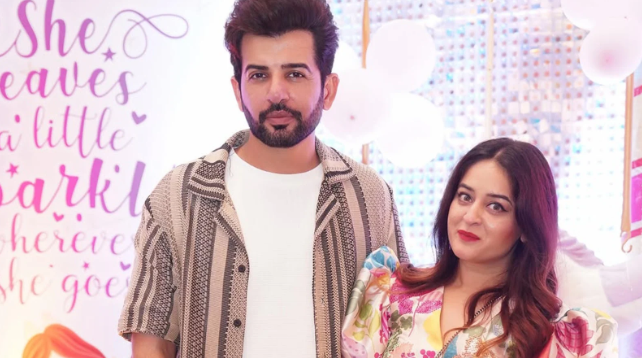
Mahhi and Jay’s announcement stood out not because of what it revealed, but because of what it refused to indulge in. There were no accusations, no emotional outbursts, and no coded references to betrayal or bitterness.
“Today we choose to part ways on a journey called life, yet we continue to have each other’s backs,” the couple wrote. They underlined values like peace, growth, kindness, and humanity, framing the separation as a thoughtful decision rather than a collapse.
Perhaps the most powerful line was also the simplest:
“There is no villain in this story.”
In a culture where breakups are often reduced to winners and losers, that sentence quietly dismantled the expectation that someone must be at fault.
Redefining Separation in the Public Eye
Long-term marriages ending tend to trigger assumptions—especially in Indian society—about failure, compromise, or unresolved conflict. Mahhi and Jay’s message challenged that narrative by presenting separation as a conscious, emotionally regulated choice, not a breakdown.
Their words suggested that sometimes relationships change not because of cruelty or neglect, but because two people evolve differently. And acknowledging that change can be an act of responsibility rather than defeat.
For many readers, this reframing felt refreshing. It validated the idea that endings do not always require anger to be legitimate.
Children at the Centre of the Decision
A significant part of the couple’s statement focused on their children—Tara, Khushi, and Rajveer. Rather than treating parenting as a secondary concern, Mahhi and Jay placed it at the heart of their decision.
They committed to being “the best parents, the best friends, and whatever else it takes to do what is right” for their children.
This clarity matters. Research consistently shows that children are not harmed by separation itself as much as they are by ongoing conflict, instability, and emotional hostility between parents. By publicly affirming cooperation and respect, Mahhi and Jay sent a strong signal—not just to their children, but to other families navigating similar transitions.
What Does ‘Choosing Peace Over Drama’ Really Mean?
According to Sonal Khangarot, licensed rehabilitation counsellor and psychotherapist, choosing peace during separation is less about grand gestures and more about everyday behaviour.
It means:
Not arguing loudly or aggressively in front of children
Avoiding negative conversations about the other parent within earshot
Resisting the urge to seek validation through family gossip or social media
In Indian households, where extended families often live together, this becomes even more complex. Choosing peace may involve calmly coordinating routines despite emotional discomfort, attending school meetings together without tension, and allowing grandparents to maintain relationships with both parents.
Peace, in this sense, is an active practice, not emotional suppression.
Emotional Regulation Is Not Emotional Denial
One common misconception is that calm separations mean emotions are being ignored. Mental health professionals stress that this is not the case.
Khangarot explains that when couples say there is “no villain,” grief can feel confusing. Without anger to hold onto, individuals may struggle to justify their sadness—to themselves or others.
In Indian culture especially, endurance is often praised over emotional expression. People are encouraged to “stay strong,” move on quickly, and avoid discussing pain. But unprocessed emotions do not disappear; they resurface later as anxiety, resentment, or emotional exhaustion.
Healthy processing involves private, safe spaces—therapy, journaling, trusted friendships—rather than public confrontation or silent suffering.
Co-Parenting Requires Structure, Not Just Good Intentions
Promising to be “best parents” after separation is meaningful, but sustaining it requires boundaries.
Experts highlight the importance of:
Separating personal history from parenting responsibilities
Keeping communication child-focused and predictable
Avoiding mixed signals, such as family outings that resemble reunions unless clearly explained to children
Children thrive on clarity. When parents are inconsistent or emotionally ambiguous, children may develop false hope or internal conflict. Clear communication—about routines, schooling, health, and discipline—helps children feel secure even as family structures change.
Friendliness between parents is healthy, but structure is essential.
Respecting Change Without Rewriting the Past
Another notable aspect of Mahhi and Jay’s statement was their insistence on continued respect and friendship. This does not mean the marriage lacked meaning or success. Instead, it honours what existed without forcing it to continue unnaturally.
Psychologists often emphasise that relationships do not need to last forever to be valuable. A peaceful ending can coexist with gratitude for shared years, memories, and growth.
By acknowledging this publicly, the couple offered a quieter, more mature model of closure—one that resists both bitterness and denial.
Why This Resonates Beyond Celebrity Culture
While Mahhi Vij and Jay Bhanushali are public figures, the emotional themes in their announcement resonate deeply with ordinary families. Many couples stay in unhappy marriages out of fear—fear of judgment, fear of harming children, fear of social consequences.
This announcement subtly challenges those fears by showing that:
Separation does not have to mean chaos
Children benefit more from emotional stability than forced togetherness
Dignity can exist even at the end of a long relationship
It reframes separation not as a scandal, but as a transition.
Grief Can Exist Even Without Blame
Perhaps the most important takeaway is this: peaceful endings still involve loss.
There is grief in letting go of shared routines, future plans, and familiar roles. The absence of anger does not eliminate sadness. Recognising this allows individuals to mourn honestly rather than minimising their pain.
As Khangarot notes, strength lies in naming disappointment without self-blame, allowing sadness without rushing to “move on,” and understanding that peace does not mean emotional numbness.
A Quiet Lesson in Emotional Maturity
Mahhi Vij and Jay Bhanushali’s separation announcement did not demand attention—it earned it through restraint. In choosing calm language over conflict, they modelled emotional maturity in a space that often rewards drama.
Their story reminds us that not all endings need to be loud to be meaningful. Sometimes, the most powerful choice is not to fight—but to step back, protect what matters most, and move forward with kindness.