The Indian FMCG industry is entering 2026 with optimism, expecting stronger sales and better profits. This positive outlook is fueled by stable raw material costs, government policies like potential tax cuts, and a recovering rural economy. After a period of slower growth, the industry anticipates high single-digit volume growth, meaning people will buy more everyday products.
A key trend is “premiumisation,” where consumers are selectively spending more on products offering better quality, health benefits, or unique experiences. Urban demand, which had lagged, is also expected to rebound. To capture this growth, companies are radically changing their strategies. They are shifting advertising money from traditional media to digital platforms to connect with younger audiences. Heavy investment is flowing into technology like AI for smarter forecasting and supply chains, while quick-commerce (10-30 minute delivery) becomes a central sales pillar.
Despite the optimism, challenges remain from fierce competition and shifting consumer habits. Overall, the sector is betting on a consumption revival, driven by favorable economics and its own strategic adaptations to a digital-first market.
Why 2026 Looks Like a Good Year
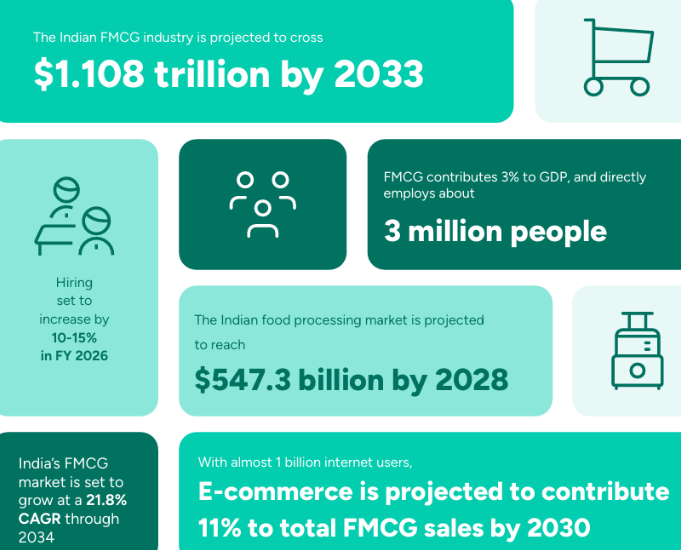
The Indian FMCG industry (companies that make everyday products like soap, biscuits, tea, and shampoo) is feeling optimistic about 2026. They think it will be a favorable year because of a few key reasons. The government’s policies, like possible tax reliefs and GST reforms, are expected to put more money in people’s pockets. Also, the cost of raw materials (commodities) is stable and not shooting up. This combination should lead to higher sales by volume—meaning people will buy more number of products—and companies will also enjoy better profit margins.
The Big Growth Drivers
Four major forces are expected to reshape the market:
Rising Incomes: A growing middle class and affluent consumers are willing to spend more.
Rural Recovery: After a tough period, demand from rural areas is bouncing back strongly.
Young Population: Millennials and Gen Z prefer buying for experience and lifestyle, pushing certain categories.
Technology: From AI to quick delivery apps, tech is changing how companies operate and sell.
The Urban-Rural Puzzle and The Premium Shift
One puzzle that has confused experts is that FMCG volume growth (4-5%) has been slower than the country’s overall economic growth (7-8%) for some years. Interestingly, rural demand has recently been stronger than urban demand. However, with new tax reforms, urban demand—which is a major growth engine—is expected to make a comeback in 2026.
A clear trend that will continue is premiumisation. This doesn’t mean everyone is buying luxury items. It means consumers are more selectively choosing to pay a bit extra for products that promise better quality, health benefits, or a special experience. For example, choosing a face wash with special ingredients over a basic one.
How Companies Are Adapting Their Strategies
To catch this growth wave, companies are changing how they operate:
Marketing & Media: They are shifting money away from only TV and print ads. Since people, especially the youth, are spending more time on digital platforms (social media, streaming services), companies are now focusing on digital-first, personalised advertising to stay relevant.
Supply Chain & Tech: Investing in technology is no longer optional. Companies are using automation, data analytics, and AI to better forecast demand, manage supplies, and engage with you personally. Quick-Commerce (10-30 minute deliveries) is becoming a critical part of their sales strategy.
Sales Channels: Organized retail, e-commerce, direct-to-consumer (D2C) brands, and quick-commerce are expected to gain more market share. Even consumers in smaller towns are shopping online more.
CONCLUSION
Despite the optimism, there are challenges. Competition is fierce, not just from big national brands but also from agile regional and D2C brands. The monsoon rains always remain a factor for rural demand. Also, companies need to continuously adapt to fast-changing consumer habits and the structural shift towards online shopping.
In short, the Indian FMCG sector is heading into 2026 with a positive mindset. They are betting on a stable economy, supportive policies, and a recovering consumer—both in cities and villages. To win, they know they must sell smarter, leverage technology, and meet the consumer’s desire for better-quality products, all while navigating a competitive and fast-evolving market.
Disclaimer:
This narrative is solely intended for educational reasons. The opinions and suggestions are not those of Mint, Before making any financial decisions, we suggest investors to speak with qualified specialists. ( THIS POST IS FOR EDUCATIONAL PURPOSE ONLY)