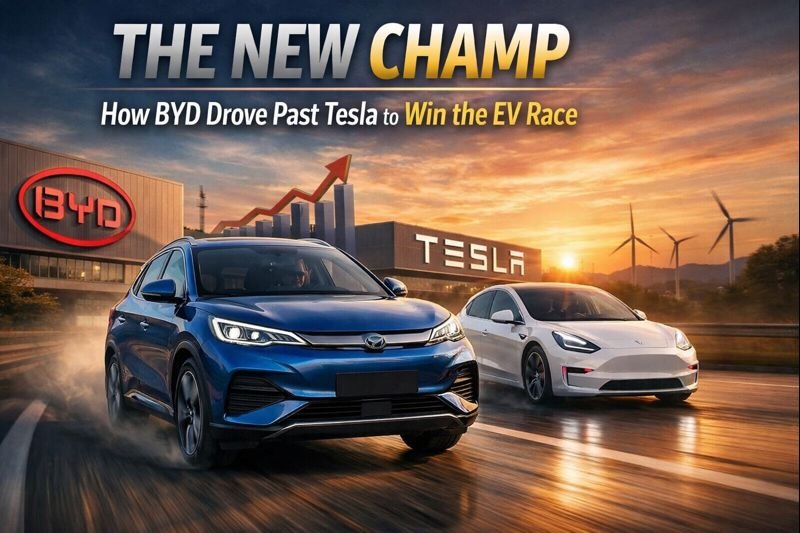
Let’s talk about a major changing of the guard in the world of cars. For years, when you thought of electric vehicles, one name dominated the conversation: Tesla, led by the famous (and often controversial) Elon Musk. Tesla was the undisputed king, the pioneer that made electric cars cool and desirable. But in 2025, the crown was passed. A Chinese company named BYD didn’t just catch up; it sped ahead, becoming the world’s largest seller of electric vehicles. This isn’t just a corporate milestone; it’s a story about shifting global power, different strategies, and how the future of driving is being shaped.
Tesla Hits a Speed Bump
First, let’s look at what happened to the former champ. Tesla had a tough 2025. For the first time ever, the company saw its annual deliveries of vehicles go down, not up. They delivered 1.63 million cars, which was about 8.6% fewer than the year before. Their production lines also slowed, making 6.7% fewer cars.
Why the stumble? A few reasons. The electric vehicle market is getting crowded. While Tesla still has its passionate fans, other companies are now offering compelling alternatives. Tesla’s lineup has aged somewhat; the Models S, X, 3, and Y have been around for a while, and the promised “next-gen” affordable car has been slow to arrive. Furthermore, Tesla’s intense focus on futuristic tech like self-driving software, while ambitious, may have diverted some attention from the core business of simply making and selling more cars in a fiercely competitive market. Think of it like a brilliant inventor who keeps working on a revolutionary new engine but misses that competitors are already selling great, reliable cars right now.
BYD’s Quiet, Steady Climb to the Top
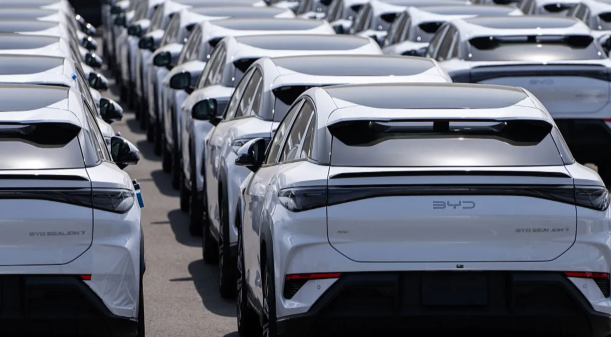
On the other side of the world, BYD was on a very different path. While Tesla is a household name, BYD (which stands for “Build Your Dreams”) has been a less flashy, but incredibly focused, contender. In 2025, they delivered a staggering 4.6 million vehicles in total. Out of those, a massive 2.25 million were pure electric cars—a jump of 28% from the year before. Their overall sales grew by a healthy 7.7%.
So, how did a company many outside China barely knew a decade ago pull this off? The secret isn’t one magical trick, but a powerful combination of factors.
The Engine of BYD's Success: More Than Just Batteries
People call them an automaker, but BYD’s biggest strength started under the hood—literally. They are a battery powerhouse. Before they even made a full car, BYD was a major producer of batteries for phones and electronics. This expertise gave them a huge head start. While other car companies, including Tesla, have to buy batteries from suppliers or form partnerships, BYD makes its own. This control over the most important and expensive part of an electric car is a game-changer. It lets them manage costs better, innovate faster, and ensure supply.
But that’s not all. BYD understood that the jump to fully electric cars might be scary for some people. So, they mastered the “plug-in hybrid.” These are cars that have a smaller battery for daily electric driving and a gasoline engine for longer trips, eliminating “range anxiety.” This offered a perfect bridge for millions of buyers not ready to go fully electric. By dominating this segment, BYD built a massive customer base and brand loyalty, many of whom are now transitioning to their pure electric models.
Finally, their product lineup is like a supermarket compared to Tesla’s boutique showroom. Tesla has a handful of (relatively expensive) models. BYD sells everything from tiny, affordable city cars (like the Seagull) to family sedans, SUVs, and luxury vehicles under its “Yangwang” brand. They have a car for almost every budget and need, which allows them to tap into far more markets around the world.
The Home-Turf Advantage: China's EV Ecosystem
You can’t understand BYD’s rise without looking at its home country. China didn’t just want to be a player in the EV race; it wanted to build the entire track. The government provided strong policy support, subsidies for buyers, and invested heavily in charging infrastructure. More importantly, China built the world’s most complete and efficient supply chain for electric vehicles and their batteries.
This is the secret sauce. From mining raw materials to producing battery cells, motors, and software, China has a dense network of companies all working together. This ecosystem makes production faster and cheaper. Even Tesla relies heavily on its factory in Shanghai to keep its global deliveries on track. This fact highlights a deep irony: Tesla’s success has been partly powered by the very Chinese industrial system that produced its biggest rival.
As Cui Dongshu of the China Passenger Car Association put it, Chinese firms like BYD invest heavily in research, develop core tech rapidly, and benefit from this unparalleled manufacturing and supply chain ecosystem. It’s like they have the best practice field, the best coaches, and all the best equipment right in their backyard.
What This Shift Means for All of Us
So, BYD is number one now. What does that mean for the global car market?
Competition is Heating Up: This is great news for consumers. More competition means more choices, better technology, and potentially lower prices. The pressure is now on Tesla and legacy automakers like Volkswagen, Toyota, and GM to innovate faster and compete on both tech and cost.
The Center of Gravity is Moving East: The automotive world, for over a century dominated by Europe, America, and Japan, is seeing a fundamental shift. China is now the epicenter of electric vehicle innovation, manufacturing, and sales. Global brands will need to either compete head-on or find ways to collaborate with Chinese giants.
It’s Not Just About Cars Anymore: The race is about the entire ecosystem: batteries, charging networks, and smart software. BYD’s vertical integration—controlling everything from batteries to chips to cars—is becoming a blueprint for success. The winners will be those who control the core technology, not just assemble the parts.
A Challenge for the West: For politicians and industries in Europe and North America, BYD’s ascent is a wake-up call. It underscores the need to develop their own battery supply chains and manufacturing capabilities to avoid becoming overly dependent on a single region for the technology of the future.
Conclusion
In simple terms, the electric vehicle game has entered a new, more intense season. Tesla, the brilliant and charismatic star player who changed the sport forever, is now being challenged by a supremely well-trained and well-equipped team. BYD’s victory in 2025 is more than a sales title; it’s proof that the future of transportation is being written not just in Silicon Valley boardrooms, but on the factory floors and innovation hubs of China. The road ahead is electric, and it’s getting more crowded—and interesting—by the day.