
The year 2025 was nothing short of fascinating for the tablet market. We witnessed hundreds of new models hitting the shelves, ranging from compact slates with flagship-level performance to massive Ultra editions designed for productivity and entertainment. Whether you were looking for a premium powerhouse, a gaming-focused device, or a budget-friendly option, this year had something for everyone.
Apple continued to dominate shipments worldwide, but Android manufacturers stepped up in a big way, offering compelling alternatives across every price segment. With so many releases, it’s difficult to crown a single “best tablet,” but we’ve rounded up the standout devices of 2025 that truly made an impact.
iPad Pro 11 & iPad Pro 13 (2025)
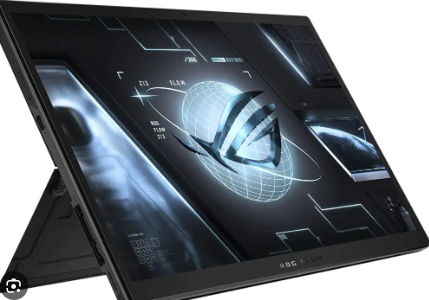
Apple’s iPad Pro lineup remained the gold standard for premium tablets. While the 2025 models didn’t reinvent the formula, they refined it enough to stay ahead of the competition.
- Powered by the M5 chip, arguably the most powerful mobile processor available, the new iPads delivered unmatched performance.
- Both sizes — 11-inch and 13-inch — came with 12GB RAM as standard, ensuring smooth multitasking.
- Connectivity was upgraded with Apple’s N1 networking chip, supporting Wi-Fi 7 and Bluetooth 6, while cellular versions introduced the long-awaited C1X modem.
- The Ultra Retina Tandem OLED displays remained among the best in the industry, offering vibrant colors, deep blacks, and buttery-smooth visuals.
Another highlight was the ability to output at 120Hz to external displays, complete with Adaptive Sync (VRR) support. For creative professionals, this was a huge step forward.
Of course, the premium design and thin industrial build continued to impress, but the price tag — starting at $999/€1,099/£999 — reminded buyers that the iPad Pro is still not a true laptop replacement.
Samsung Galaxy Tab S11 Ultra
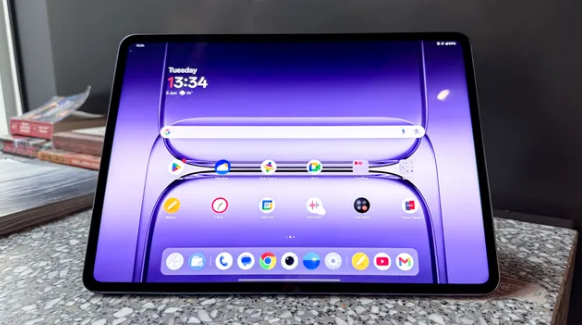
On the Android side, Samsung delivered one of the most impressive tablets of the year with the Galaxy Tab S11 Ultra.
- Featuring a razor-thin 1mm aluminum unibody, it was both sleek and durable.
- The massive 6-inch AMOLED display paired with quad speakers made it perfect for media consumption.
- Samsung bundled the S Pen stylus, catering to artists, students, and professionals.
Performance was equally strong thanks to the MediaTek Dimensity 9400+ chipset, which posted excellent benchmark scores. The 11,600mAh battery provided over 13 hours of active use, making it one of the most enduring tablets we tested.
With One UI 8 based on Android 16 and Samsung DeX, users could unlock a desktop-like workflow. However, much like the iPad Pro, the Tab S11 Ultra carried a premium price tag, reminding us that tablets still struggle to fully replace laptops.
OnePlus Pad 3
OnePlus surprised many with the Pad 3, a tablet that undercut rivals while still offering flagship-level performance.
- Priced at $700/€599/£529, it was significantly more affordable than Apple and Samsung’s offerings.
- It featured a 144Hz LCD panel with outstanding brightness, proving that non-OLED displays can still shine.
- Powered by Qualcomm’s Snapdragon 8 Elite chipset, it delivered smooth performance across apps and games.
- The 12,140mAh battery with 80W fast charging ensured long usage and quick top-ups.
OnePlus also introduced Oppo O+ Connect, a feature that allowed users to remotely control their Mac or Windows PC. While not perfect, it was a genuine attempt at bridging the gap between tablets and laptops.
RedMagic Astra
Gaming tablets are rare, but the RedMagic Astra carved out a niche in 2025. Compact yet powerful, it was a dream device for mobile gamers.
- Built around a 9-inch LTPO AMOLED display with a 165Hz refresh rate, it offered ultra-smooth visuals.
- The Snapdragon 8 Elite chip paired with an 8,200mAh battery and 80W charging kept performance consistent.
- Unique features included a dual vapor chamber cooling system and a spinning RGB-lit fan, ensuring the device stayed cool during long gaming sessions.
- A side-mounted USB 3.2 Gen2 port with bypass charging further enhanced the gaming experience.
Benchmark scores placed the Astra among the best-performing tablets of the year, and its compact form factor made it ideal for both gaming and media consumption.
Infinix Xpad GT
Infinix made waves with the Xpad GT, a tablet that revived the Snapdragon 888 chipset from 2020.
- While the chip had a reputation for overheating in smartphones, the larger chassis and vapor chamber cooling system allowed it to perform admirably in a tablet.
- The 13-inch LCD display with 144Hz refresh rate was bright and responsive.
- An eight-speaker setup delivered immersive audio, while the 10,000mAh battery ensured solid endurance.
- Priced at just $400/€355, it offered excellent value for money.
The Xpad GT proved that older flagship hardware, when properly optimized, can still compete with modern midrange chips.
Redmi Pad 2 Pro
For budget-conscious buyers, the Redmi Pad 2 Pro was one of the best options under $300/€300/£300.
- It featured a 1-inch 120Hz LCD and a Snapdragon 7s Gen 4 chip, delivering reliable performance.
- The massive 12,000mAh battery aced endurance tests, making it perfect for long hours of use.
- Xiaomi’s HyperOS 2 software suite added useful features and customization options.
- The aluminum unibody design gave it a premium feel despite the low price.
What set the Redmi Pad 2 Pro apart were two rare features: a headphone jack and a microSD card slot. These additions made it more versatile than many pricier tablets. Whether for light work, media consumption, or casual gaming, it delivered excellent value.
Final Thoughts
2025 was a year of diversity in the tablet market. Apple continued to dominate with the iPad Pro series, offering unmatched performance and premium design. Samsung’s Galaxy Tab S11 Ultra stood out as the best large-screen Android tablet, while OnePlus impressed with the more affordable Pad 3.
Gaming enthusiasts found a new favorite in the RedMagic Astra, while Infinix proved that older hardware can still shine with the Xpad GT. And for budget buyers, the Redmi Pad 2 Pro delivered incredible value without cutting too many corners.
The takeaway? Tablets in 2025 weren’t just about being laptop replacements. They carved out unique identities — from gaming companions to productivity tools — ensuring that there was a perfect slate for every type of user.