
Adani Aerospace & Defence has taken a decisive step toward reshaping India’s civil aviation landscape by signing a strategic Memorandum of Understanding (MoU) with Brazilian aircraft manufacturer Embraer to assemble commercial aircraft in India. The partnership marks a significant boost for the government’s Make in India initiative and positions the country closer to becoming a global hub for regional aircraft manufacturing.
The agreement was announced on Tuesday at an event hosted by the Ministry of Civil Aviation, attended by Union Civil Aviation Minister Ram Mohan Naidu and senior officials from both companies. While key operational details such as the final location of the assembly facility and partnership structure are still under discussion, the intent is clear: to localise aircraft production and build a comprehensive regional transport aircraft ecosystem in India.
Embraer, the world’s third-largest aircraft manufacturer after Airbus and Boeing, plans to assemble its popular regional jets in India, targeting a fast-growing market that increasingly relies on smaller aircraft to connect Tier-2 and Tier-3 cities.
Execution Plans to Take Shape Soon
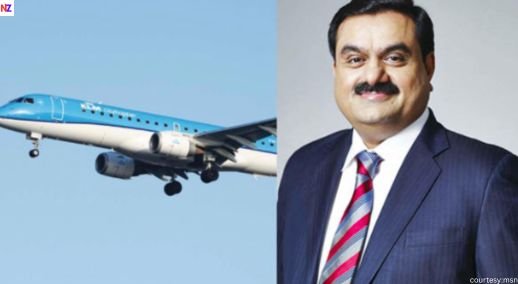
Jeet Adani, Director at Adani Defence & Aerospace, indicated that more concrete details on the project’s rollout are expected in the near term. He said preparatory work would move ahead alongside final decision-making, ensuring momentum is maintained from the outset.
“Over the next couple of months, we should have clearer visibility on timelines and the overall structure. At the same time, we plan to start initial work at the chosen location while the finer points are being finalised,” Jeet Adani said.
Embraer also confirmed that conversations around the ownership framework are still underway. While a 50:50 partnership is currently on the table, the company noted that the final arrangement will be determined after further discussions.
A Vision That Goes Beyond Assembly Lines
Adani Aerospace & Defence and Embraer have made it clear that their partnership is not limited to putting aircraft together on an Indian assembly floor. Instead, the two companies are working toward building a full-scale regional aviation ecosystem, designed to support India’s long-term civil aviation growth.
The broader plan includes aircraft manufacturing, development of local supply chains, maintenance and repair operations, pilot training, and long-term aftermarket support. Together, these elements are expected to create a self-sustaining framework that reduces dependence on overseas facilities while strengthening domestic capabilities.
Arjan Meijer, President and CEO of Embraer Commercial Aviation, said the collaboration brings together complementary strengths. According to him, Embraer’s global aerospace experience and Adani’s industrial scale offer a strong foundation for supporting India’s regional transport ambitions through advanced and efficient solutions.
Jeet Adani underlined the strategic relevance of the move, pointing out that regional aviation plays a vital role in economic development. With improved air connectivity becoming essential for smaller cities, he said the focus has shifted toward creating a homegrown aviation ecosystem that can meet rising demand. He also noted that the partnership adds depth to India–Brazil relations by aligning industrial capabilities across borders.
Ashish Rajvanshi, President and CEO of Adani Defence & Aerospace, described the agreement as a decisive step toward building a self-reliant aviation sector. He said the initiative would help narrow connectivity gaps between urban and rural India, create high-quality jobs, and enhance India’s global standing in aerospace manufacturing.
UDAN Lays the Groundwork for Regional Growth
Civil Aviation Secretary Sameer Kumar Sinha highlighted how India’s aviation sector has entered a phase of rapid expansion. He attributed much of this momentum to infrastructure upgrades, rising passenger volumes, and targeted government policy.
According to Sinha, the UDAN scheme has played a transformative role by bringing air services to airports that were previously unserved or underutilised. This renewed connectivity has reshaped travel patterns and strengthened the case for smaller, regionally operated aircraft.
He added that Indian airlines have placed orders for more than 1,800 aircraft, underlining the scale of growth expected in the coming years. In that context, Sinha described the Embraer–Adani MoU as a milestone that goes beyond assembly work, helping establish a resilient domestic supply chain and positioning India as a reliable manufacturing base for regional aircraft.
Embraer’s Footprint in Indian Aviation
Embraer already has a well-established presence in India, with close to 50 aircraft across multiple variants operating for the Indian Air Force, government departments, and regional carrier Star Air. The company has also offered its C-390 Millennium military transport aircraft for the Indian Air Force’s Medium Transport Aircraft programme under a separate Make in India collaboration.
Looking ahead, Embraer estimates that India will require over 500 aircraft in the 80–140 seat category over the next two decades, driven largely by regional connectivity needs. As part of its push in the Indian market, the company will display its E195-E2 and E175 jets at Wings India 2026, starting January 28.
With policy backing, rising demand, and industry alignment coming together, the Adani–Embraer partnership signals a pivotal moment in India’s journey toward becoming a regional aviation manufacturing powerhouse.