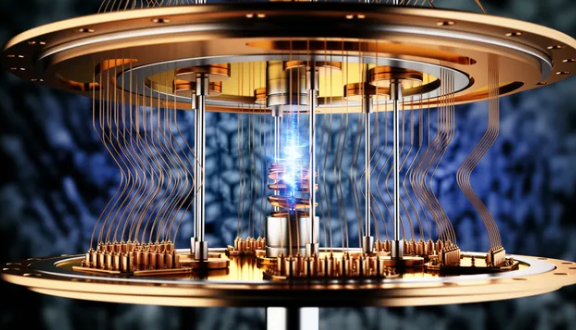
A quantum computer works on a totally different principle. It uses quantum bits, or “qubits.” Here’s where things get weird and wonderful. Because of the strange rules of quantum physics, a qubit isn’t just on or off. It can be in a state where it’s sort of on and sort of off at the same time. This is called “superposition.” It’s as if that light switch is in a blurry, in-between state.
The Basic Idea: A Different Kind of Switch
Your everyday computer, the one you’re using right now, runs on bits. Think of a bit as a tiny light switch. It can only be in one position: ON (which we call 1) or OFF (which we call 0). Every app, video, and website is built from millions of these flipping switches doing calculations one step at a time. It’s powerful, but it’s linear, like reading a book page by page.
This changes everything. While a regular computer has to check paths one by one, a group of qubits in superposition can, in a sense, explore many paths simultaneously. If a classic computer’s job is to check every book in a library individually, a quantum computer can—in a very simplified way—glance at all the shelves at once. This gives it a potential shortcut for certain types of monstrously complex problems.
The Sky-High Promise (And Why Guesses Vary Wildly)
This “shortcut” ability is what fuels all the excitement and the eye-popping dollar figures you hear about. The promise is that quantum computers could one day tackle problems that are simply impossible for today’s best supercomputers. We’re talking about designing new life-saving medicines by simulating molecules atom-by-atom, finding the absolute most efficient routes for entire global supply chains, or creating unbreakable encryption.
Right now, the whole industry is small, bringing in roughly a billion dollars a year, mostly in research. But analysts are trying to peer into the future. One major report suggests that by 2040, this could grow into a market worth nearly $200 billion. Other estimates swing from a more modest $17 billion by 2035 to over $170 billion. So why can’t they agree?
The huge range in predictions is the clearest sign of where we actually are: the very, very beginning. These numbers capture both the towering hope and the honest uncertainty. Everyone sees the potential, but no one knows for sure when it will become a practical, widespread tool. It’s like someone in 1990 trying to guess the exact economic impact of the internet. The direction seems clear, but the timeline and scale are fuzzy.
The Messy, Expensive Reality on the Ground
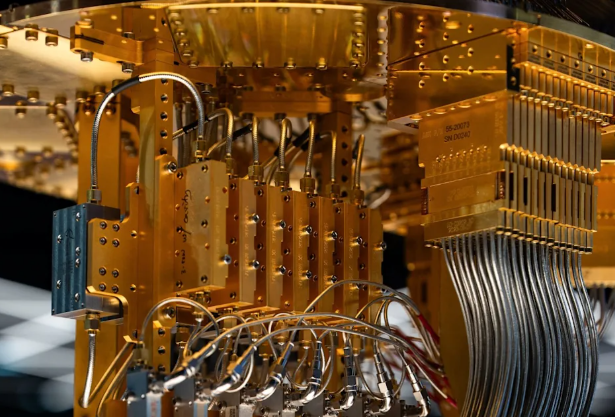
So, what’s happening today? We’ve moved from blackboard theory to real machines you can actually use—but they are incredibly finicky babies. Qubits are notoriously fragile. A tiny vibration or a stray bit of heat can wreck their delicate quantum state. To keep them stable, they often need to be isolated in super-powerful refrigerators colder than outer space, with precise lasers and shielding. A whole supporting industry is sprouting just to build these exotic parts, funded by governments and tech giants like Google and IBM.
The leading companies making the computers themselves, however, feel a lot like bleeding-edge startups. Look at their finances, and you’ll see the real story. Companies like IonQ and D-Wave are reporting exciting revenue growth, but they are still losing hundreds of millions, even billions, of dollars each quarter. Their money is being poured into research and building better machines. A smaller player, Quantum Computing Inc., managed a tiny profit, but its revenue was under $400,000—a drop in the bucket.
The takeaway here is crucial: fantastic promise, but not yet a proven, mass-market product. These companies are in a high-stakes race to build a better mousetrap, and that costs a fortune. They’re selling the future, and right now, investors are buying that vision.
What Comes Next: A Gradual Climb, Not a Sudden Leap
Don’t expect a quantum laptop anytime soon. The path forward is a slow and steady climb. Most experts believe quantum computers won’t replace our classic computers. Instead, they’ll become incredibly powerful specialized tools, likely accessed over the cloud. Imagine logging into a service to run a specific, crushing calculation for your new battery design or drug compound, then using your regular computers for everything else.
The belief is that by 2030, investment in quantum computing will grow to represent a small but meaningful slice—maybe around 2%—of all the world’s spending on computing. We’re starting to see it move from pure lab experiments to pilot projects with real companies trying to solve actual problems.
Conclusion
In short, quantum computing is one of the most fascinating technological stories of our time. The science is mind-bending, the potential numbers are astronomical, and the race is on. But the balance sheets of the companies in the race are a sobering reminder of the hard work ahead. We’re watching the expensive, messy, and utterly thrilling birth of an entirely new industry. The next decade and a half will be all about turning that breathtaking “what if” into a practical and reliable “here’s how.” It’s a story we’re all just starting to read.

Ghananand is the Founder & Chief Editor of NewzStrome. Hailing from Prayagraj, Uttar Pradesh, he brings 1.5 years of hands-on experience in journalism and digital media. He delivers sharp, unbiased, and timely news from India and across the globe. Passionate about investigative reporting, technology, politics, and lifestyle, Ghananand is committed to bringing readers nothing but the truth