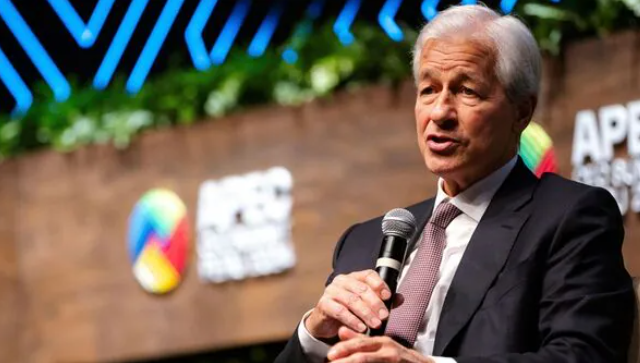
When Jamie Dimon, the CEO of America’s largest bank, speaks about AI, people listen.
But if you only hear “AI will eliminate jobs,” you’re missing his real message. Dimon isn’t painting a sci-fi horror scenario; he’s giving a realistic, almost urgent, message to today’s workers. The key point he’s making is this: AI won’t just take jobs away; it will completely redefine what kind of value is needed in a role. The bigger danger isn’t being replaced by a machine tomorrow; it’s slowly becoming irrelevant because your skills no longer fit what’s required. The standards are changing, and his advice is a guide on how to stay ahead.
Critical Thinking: Your Anchor in a Sea of Data

As AI becomes exceptionally good at processing numbers, identifying patterns, and carrying out tasks, what’s left for humans? The ability to ask why, to question the results, and to make judgments in complicated, real-world situations. Think about it: an AI can provide a risk assessment, but it can’t tell you if it’s the right time to launch a bold product culturally. It can draft a legal brief, but it can’t sense the tension in a courtroom and adjust an argument.
Emotional Intelligence: The Un-Codeable Advantage
This might be the most human skill on the list. AI has no feelings, no empathy, and no personal experiences. It can act like it cares in a chat, but it can’t genuinely build trust, boost morale, or foster team culture. As Satya Nadella of Microsoft noted, once the technical aspects are managed by machines, the human part becomes your main strength. This is about self-awareness—knowing how your stress affects your team—and social awareness, like reading a client’s unspoken hesitation. It’s about handling conflict, encouraging collaboration, and leading with a style that people truly want to follow. These are the essential skills that hold projects and companies together.
Mastering the Meeting: Communication as a Superpower
Dimon’s advice to “learn how to be good in a meeting” may sound simple, but it’s highly specific.
In an era of remote work, cross-functional teams, and massive information, the ability to communicate clearly in real-time is a rare and valuable asset. AI can prepare agendas and reports, but it can’t read the room. This skill is about actively listening to understand, not just to respond. It’s about quickly bringing together different opinions, expressing a complex idea clearly, and guiding a group from discussion to decision. The person who can do this doesn’t just contribute—they raise the whole team’s performance and are sure to be noticed.
Writing: Your Professional Signature
In a world full of AI-generated content, clear, strong, and thoughtful writing is your mark.
Dimon’s point is that writing isn’t about length or fancy language; it’s about conveying meaning, context, and responsibility. An AI can write a 1000-word memo, but can it capture your company’s voice in a sensitive client apology? Can it turn a chaotic project update into three clear points that make a busy executive take action? Your writing shows your critical thinking and emotional intelligence. It’s how you persuade, inform, and lead through words—whether on paper or on a screen. It proves that you’ve thought through information, not just repeated it.
Adaptability: The Meta-Skill That Unlocks Everything
Behind all these skills is a mindset: the ability and willingness to keep learning.
Dimon acknowledges this transformation will be difficult and that support is important. But as individuals, our best protection is a proactive curiosity. It’s about recognizing that your previous way of working might fade, and the ability to adjust. As Ginni Rometty, former IBM CEO, said, adaptability is what humans do best. It means seeing your career not as a fixed title, but as a collection of growing skills that you continuously build.
The Bottom Line: Redrawing the Line of Human Value
So why do these “soft” skills matter now more than ever?
Because AI is forcing a clear distinction. Machines are great at speed, scale, and execution. What they lack—and what we must now focus on cultivating—are the deeply human abilities of judgment, connection, and wisdom. Dimon’s warning is ultimately encouraging. It tells us that the future of work isn’t about competing with AI to do tasks faster. It’s about focusing on what AI cannot and likely will never do: think critically, show genuine care, communicate persuasively, and adapt with courage. Our jobs won’t vanish; they will change. And those with these enduring human skills will not only survive but lead the way.

Ghananand is the Founder & Chief Editor of NewzStrome. Hailing from Prayagraj, Uttar Pradesh, he brings 1.5 years of hands-on experience in journalism and digital media. He delivers sharp, unbiased, and timely news from India and across the globe. Passionate about investigative reporting, technology, politics, and lifestyle, Ghananand is committed to bringing readers nothing but the truth