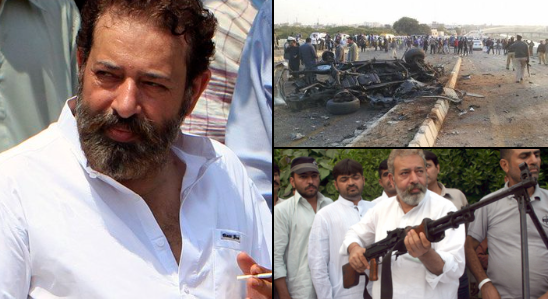
The early morning of September 19, 2011, in Karachi’s upscale Defence Phase 8 area was shattered by a massive suicide blast. A van loaded with explosives, driven by a Tehrik-i-Taliban Pakistan (TTP) bomber, crashed into the gates of a large bungalow, killing eight people instantly and injuring dozens. Amidst the rubble, black smoke, and chaos, a middle-aged man emerged—his white, starched shalwar kameez (Pathan suit) stained, a cigarette in his mouth, and a block pistol in his hand. This was SP Chaudhry Aslam Khan Swati, the infamous “Encounter Specialist” of the Karachi Police. Surveying the carnage at his own damaged home, he turned to the media cameras and made a furious declaration: he would bury the attackers in the very crater they had created, and his “jihad” against these terrorists would continue until Judgment Day, even if he had to pursue them into hell.
This dramatic moment encapsulated the life of a cop who became a legend in Pakistan’s most violent city. His story is one of relentless, controversial, and brutal warfare against the gangs and terrorists that held Karachi hostage for decades.
The Battlefield: Karachi's Lyari Gang Wars between SP Chaudhry and Rahman Dacoit
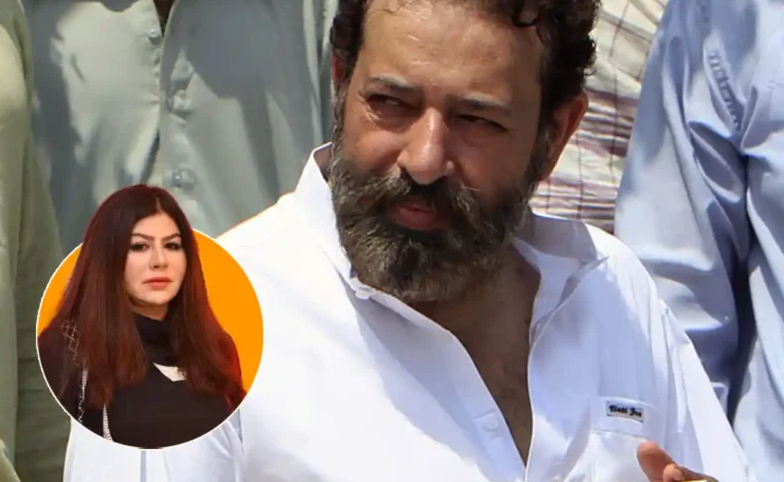
To understand Aslam’s rise, one must understand Karachi in the 2000s. The city, especially the Lyari neighborhood, was a tinderbox of political and ethnic strife fueled by powerful criminal gangs. These gangs, like the Rehman Dakait gang (Baloch-dominated and allied with the Pakistan Peoples Party – PPP) and the Arshad Pappu gang (aligned with the Muttahida Qaumi Movement – MQ(M)), operated with virtual impunity. They engaged in extortion, kidnapping, land grabbing, and murder, turning Lyari into a no-go zone. The police were often powerless, their hands tied by the gangs’ political connections.
The Making of a "Specialist"
Chaudhry Aslam, a Pashtun from Swat, joined the police in 1987. He first gained notoriety in the 1990s during state crackdowns on the MQ(M), where he earned a reputation for being fearless and ruthless. His big break came in 1999 with the arrest of Saulat Mirza, a famous MQ(M) assassin. This feat earned him a promotion and a fearsome reputation.
When General Pervez Musharraf’s regime sought to quell the violence in Lyari that challenged his authority, Aslam was the chosen instrument. Promoted to SP in 2005, he formed the “Lyari Task Force,” a heavily armed unit operating in plain clothes with a simple mandate: clean up Lyari through encounters.
The "Encounter" Era and the Vow
Aslam’s methods were straightforward and extra-judicial. His task force unleashed a wave of police encounters. Gangsters were given a choice: surrender or be killed. In 2006, he achieved a major victory by arresting the fearsome Rehman Dakait. However, in a massive embarrassment, Dakait bribed his way out of jail and escaped. Humiliated, Aslam famously vowed not to arrest Dakait again, but to bring in his corpse.
His career hit a snag later in 2006 when he was accused of a fake encounter involving a laborer. Suspended and jailed for 16 months, he was released after a political shift brought the PPP back to power. He returned to the force with a singular focus: revenge.
In 2009, he fulfilled his oath. Rehman Dakait was killed in an “encounter” in the Bin Qasim area, widely seen as Aslam’s personal vendetta. This cemented his status as the undisputed, feared “king” of Karachi’s underworld battle.
A New Enemy: The Taliban
After the Lyari gang wars, Aslam’s mandate expanded. The state now tasked him with taking on an even deadlier foe: the Pakistani Taliban (TTP) and Baloch separatist militants who were increasingly targeting Karachi.
True to form, Aslam went after them with the same brutal efficiency. He became a prime target for the TTP, surviving multiple assassination attempts, including the 2011 attack on his home. The TTP saw him as a major obstacle, a cop who refused to be intimidated and effectively targeted their networks in the city.
The End of the Chapter
The war could only end one way. On January 9, 2014, a massive bomb detonated next to Aslam’s convoy on Lyari Expressway. The man who had survived so many attacks was finally killed. The blast was so powerful that pieces of his body were difficult to recover. The TTP proudly claimed responsibility, eliminating their most formidable police nemesis.
Chaudhry Aslam's legacy is deeply polarized:
To his supporters, he was a hero and a patriot. In a city where the justice system was broken and politics protected criminals, he was seen as the only force daring enough to take on monsters. He restored a grim sense of order and protected citizens from gang rule and terrorism.
To his critics and human rights groups, he was a symbol of state brutality and extrajudicial killings. His “encounter specialist” label was a euphemism for a vigilante who bypassed the courts, likely killing many without trial and perpetuating a cycle of violence.
He became a pop culture icon, inspiring fictionalized characters like Sanjay Dutt’s in the Bollywood film Dhurandhar. Whether viewed as a necessary evil or a criminal in uniform, SP Chaudhry Aslam remains the most iconic—and controversial—policeman of modern Karachi, a man who fought fire with an inferno and left a permanent mark on the city’s violent history.
Ghananand is the Founder & Chief Editor of NewzStrome. Hailing from Prayagraj, Uttar Pradesh, he brings 1.5 years of hands-on experience in journalism and digital media. He delivers sharp, unbiased, and timely news from India and across the globe. Passionate about investigative reporting, technology, politics, and lifestyle, Ghananand is committed to bringing readers nothing but the truth