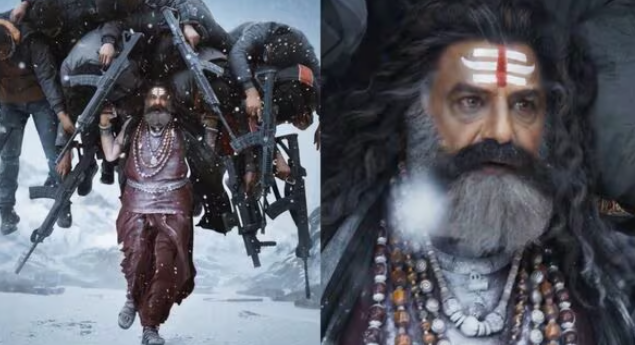
The release of Akhanda 2: Thaandavam has perfectly illustrated the stark, often unbridgeable divide that exists in modern Indian cinema. It’s a film that can be legitimately labelled both a resounding hit and a catastrophic flop, depending entirely on which lens you use to view it: the ledger of commerce or the canon of critical filmcraft. There is no middle ground here; the film is a fascinating case study in star-driven, genre-specific filmmaking that knowingly and unabashedly plays to its gallery.
Box Office Performance of Akhanda 2:

Financially, the film has made a robust opening. A first-day India net collection of approximately ₹21 crore, built on a strong ₹7.8 crore premiere, is undeniable evidence of a successful launch. The figures from its core markets—Andhra Pradesh and Telangana—are particularly impressive, with occupancies soaring between 54-62% in major cities. This indicates the potent drawing power of the Boyapati Sreenu-Balakrishna combo and the effective mobilization of their dedicated fanbase. The film is engineered for the Telugu mass audience, and there, it is delivering.
However, the box office story has clear nuances that prevent it from being declared an all-out blockbuster. The performance of the Hindi version, with a paltry 6.43% occupancy, screams that the film’s appeal is intensely regional and culturally specific. It has not transcended its core demographic. Furthermore, the 21% lower morning occupancy compared to the first Akhanda suggests that while the faithful showed up, the film may have lacked the broader curiosity or positive word-of-mouth to pull in a more general audience from the very first show. It’s a hit, but a qualified one—powerful within its kingdom, with borders that are clearly defined.
The Critical Verdict: An Unintentional Comedy of Excess
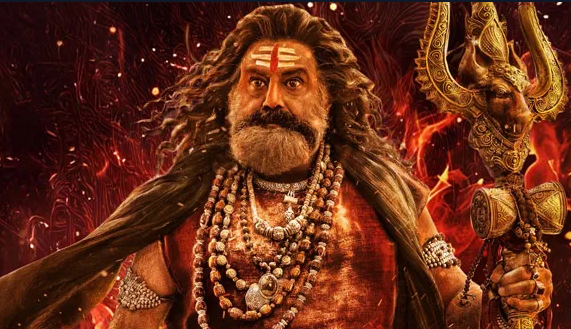
For professional critics and viewers who prioritize narrative, Akhanda 2 is not just a bad film; it’s a baffling spectacle. The criticism is near-unanimous and exceptionally harsh. The plot—a bio-warfare threat at the Maha Kumbh Mela—is dismissed as a tissue-thin scaffold, a mere “apology of a story” designed solely to string together a series of escalating action sequences. Critics argue that the film doesn’t just ask for a suspension of disbelief; it demands its complete annihilation.
The trademark Boyapati logic-defiance, accepted to a degree in mass cinema, is pushed here into the realm of pure absurdity. When the hero bends the barrel of a machine gun with his bare hands or halts a helicopter mid-air with a divine trishul, it crosses a line for many from “mass elevation” to “unintentional comedy.” The 166-minute runtime is frequently described as an endurance test, exacerbated by a screenplay that critics find boring and repetitive in its quieter moments. Even the technical prowess, like Thaman’s typically pounding background score, is critiqued as a “deafening” and relentless attempt to manufacture energy where the script provides none. From this perspective, the film is a flop of execution, a loud, incoherent mess that confuses scale for substance.
The Fan Reaction: A Devotional Celebration of Power
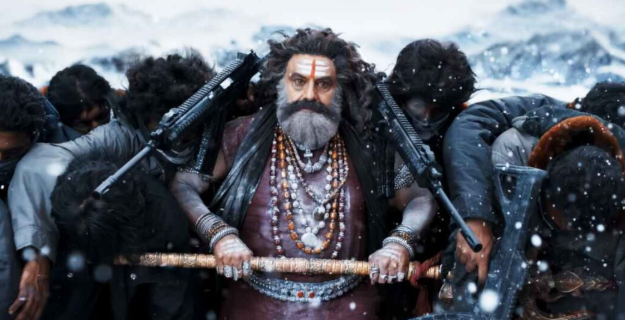
Step into a packed theatre in the film’s heartland, and you encounter a completely different reality—one of euphoria, celebration, and devotional fervor. For Balakrishna’s fans, Akhanda 2 is precisely what it was promised to be: a larger-than-life, gravity-defying tribute to their hero and the themes he embodies. The elements critics deride are the very source of fan adulation.
Balayya’s commanding, dialogue-delivering screen presence is the film’s bedrock. The action sequences, free from the shackles of physics, are celebrated as “divine” and “electrifying.” The spiritual and patriotic themes—seen by critics as opportunistic—are embraced as the film’s core strength, a powerful affirmation of Sanatana Dharma and national pride. The loud BGM isn’t deafening; it’s “thunderous” and “amp-raising.” Specific moments, like a key emotional scene involving the hero’s mother, are highlighted as peaks of cinematic power. On social media, the language is one of victory: “blockbuster,” “mass riot,” “pure energy.” For this audience, the film is an unqualified hit, delivering on every emotional and visceral promise.
The Final Verdict: A Successful Product for Its Specific Market
So, is Akhanda 2: Thaandavam a hit or a flop? The definitive answer is that it is a commercial hit designed for a specific segment of the market, and a critical flop that disregards any viewer outside that segment.
It is a hit because it understands its ecosystem perfectly. It serves a potent cocktail of star worship, religious symbolism, and hyper-stylized action to an audience that consumes it as a form of celebratory, participatory cinema. The box office numbers, particularly in its home territory, validate this strategy. It is a product that has found its consumers.
Concurrently, it is a flop by any conventional measure of cinematic storytelling, coherence, or directorial subtlety. It makes no effort to engage with logic, character development, or a plausible plot, ensuring its rejection by critics and neutral moviegoers.
Conclusion
In conclusion, Akhanda 2 embodies the duality of contemporary Indian mass cinema. It is not trying to be a universally acclaimed film. It is a ritualistic, high-decibel event for its followers. Its success is measured not in stars out of five, but in the roar of the crowd and the ringing of the cash register in Nandamuri territory. For everyone else, it remains a perplexing, often tedious, spectacle from the outside looking in.

Ghananand is the Founder & Chief Editor of NewzStrome. Hailing from Prayagraj, Uttar Pradesh, he brings 1.5 years of hands-on experience in journalism and digital media. He delivers sharp, unbiased, and timely news from India and across the globe. Passionate about investigative reporting, technology, politics, and lifestyle, Ghananand is committed to bringing readers nothing but the truth