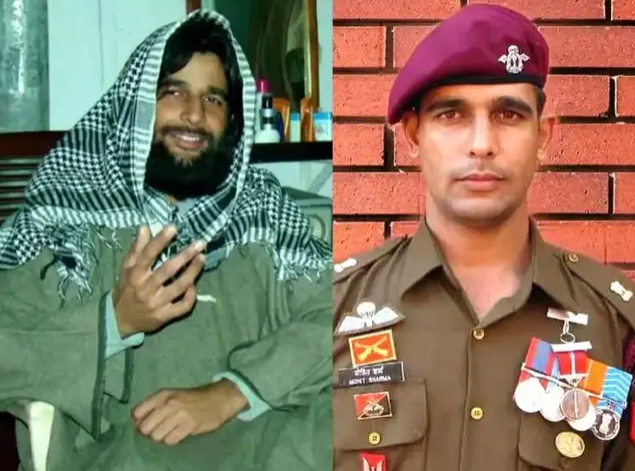
This is the tale of a lion of Hindustan, a soldier who did not merely embrace death but looked it straight in the eye and said, “Come, see for yourself how much strength lies hidden in the last breath of an Indian soldier.” This is the story of Major Mohit Sharma, the fearless commando who infiltrated Kashmir, lived among terrorists, slept on their beds, drank kahwa with dreaded Hizbul commanders, and painted their eyes with the kohl of lies. He earned their trust for weeks, only to strike in a single moment and send them to hell with bullets fired straight into their chests.
He was the lone lion who stood tall in dense forests against dozens of heavily armed militants. Bullets tore through his arms, pierced his waist, and passed through his body. Rivers of blood flowed from his wounds, yet he did not retreat. Instead, he roared: “Not a single terrorist should escape today.” This is the story of Ashok Chakra awardee Major Mohit Sharma, whose name still haunts the enemy’s sleep and swells every Indian chest with pride.
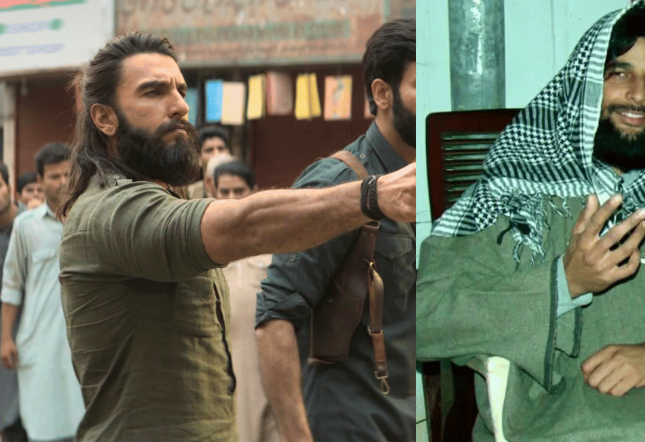
The reason we narrate this story today is because of the buzz around the film Dhurandhar. Ever since its trailer was released, the world has gone crazy—debating how Ranveer Singh looks, how Arjun Rampal looks, and how others appear. But beyond the glitter of cinema lies the real story. Ranveer Singh plays the role of Major Mohit Sharma in the film, but the real Mohit was far more terrifying and heroic than any reel portrayal could capture.
A Boy from ghaziabad : Major Mohit Sharma
Mohit Sharma was a simple boy from Ghaziabad. In 1995, he passed his 12th grade. His family thought he would become an engineer and enrolled him in college. But Mohit’s blood carried something else—the fire of the uniform. Secretly, he filled out the NDA form, took the exam, and even joined college to avoid suspicion at home. When the results came, his parents hid them, insisting he pursue engineering. But Mohit was restless. He called the UPSC office himself and learned he had passed. Without telling anyone, he traveled to Bhopal for the interview, cleared it, and later revealed everything to his family.
Initially, his parents were upset, but when they saw the madness in his eyes, they relented. There was one obstacle—Mohit was six kilos underweight, with only four weeks left for the medical test. His mother rose to the challenge, feeding him milk, bananas, and protein-rich food daily, while Mohit sweated it out in the gym. Within weeks, he gained the required weight and cleared the medical. India had found a lion who would darken the nights of its enemies.
At NDA, Mohit mastered boxing, horse riding, swimming, and more. After three years at NDA and one year at IMA Dehradun, he was commissioned in December 1999 into the 5th Madras Regiment as a lieutenant.
The Turning Point
For two years, Mohit served as a regular officer. But everything changed on December 13, 2001, when terrorists attacked the Indian Parliament. In response, Operation Parakram was launched. Mohit’s unit was deployed in Kashmir’s Rajouri sector alongside Para Special Forces. Witnessing their bravery, Mohit was captivated. He applied to join the Paras but was rejected the first time. Undeterred, he tried again in 2003 and succeeded.
Now the lion had found his jungle. Around this time, he met Captain Reshma Sarin. Love blossomed, and marriage was on the horizon. But in 2004, Kashmir called again. Hizbul Mujahideen’s terror was at its peak, led by Abu Torara and Abu Sabjad. The army decided someone must go undercover, infiltrate their network, and strike. Mohit volunteered.
Undercover as Iftikhar Bhatt
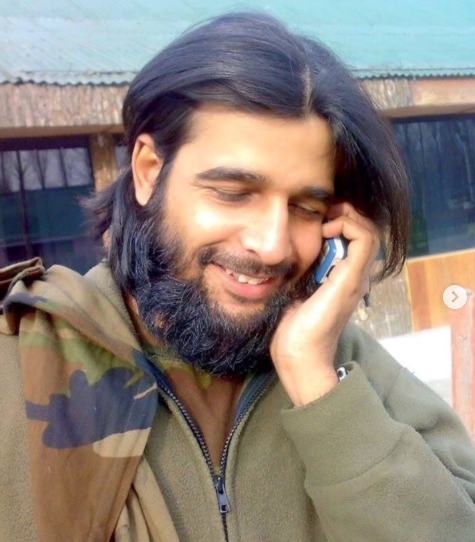
Mohit grew his hair and beard, assumed the identity of “Iftikhar Bhatt,” and spun a tale that the army had killed his brothers and he sought revenge. He presented a flawless plan to attack an army checkpoint, impressing the terrorists with his precision. They trusted him.
For two weeks, Mohit lived among them—sharing meals, making kahwa, laughing, and gathering intelligence about hideouts, code words, and weapon caches. Then came the ultimate test. Abu Torara and Abu Sabjad pointed AK-47s at him, demanding his true identity. Calmly, Mohit said, “I have told you everything. If you doubt me, shoot me.” Convinced, they lowered their guns. As they turned away, Mohit drew his pistol from beneath his shawl and fired two bullets into their chests. The valley’s biggest headaches were silenced forever.
For this act, Mohit received the Sena Medal in 2005. He married Reshma and later became an instructor at the Special Forces Training School in Nahan—a record achievement with just two years of SF experience. His parents were relieved, thinking their son was now safe. But lions do not rest when the nation is in danger.
The Final Battle – Kupwara, 2009
In October 2008, Kashmir called again. On March 20, 2009, intelligence reported terrorists in Hafuda forest, Kupwara. Mohit led 25 commandos into the dense jungle at 2:30 a.m. By morning, they found footprints in the snow—highly trained infiltrators. Soon, gunfire erupted. Commando Netra Singh was martyred. The terrorists had superior positions.
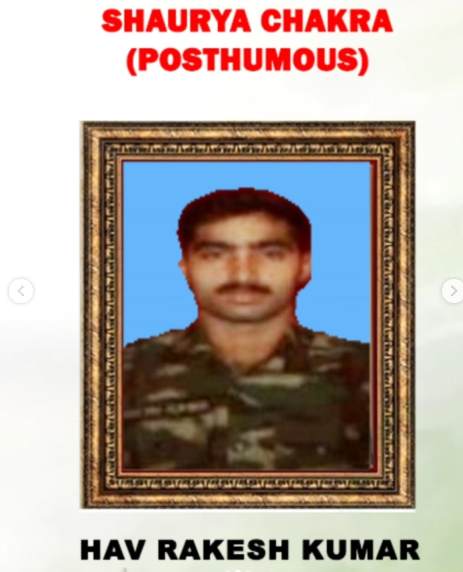
Mohit ordered Havildar Rakesh to climb a ridge and fire from above. Rakesh was shot in the thigh but continued firing despite his injury. Mohit sent his men back to cover while he provided suppressive fire. Bullets struck his arms and elbow, but he kept fighting. Then, picking up an LMG and grenades, he killed four terrorists.
As he ran toward cover, a sniper’s bullet pierced his side. Gravely wounded, he told his men, “I am fine. Not a single terrorist should escape.” Bleeding heavily, he leaned against a tree and fought until evening. By the time he was evacuated, he had lost too much blood. Despite overnight surgery, he succumbed the next morning at just 31 years of age.
The operation lasted five days, and all infiltrators were eliminated. Mohit, along with six other soldiers, was martyred. For his supreme bravery, he was posthumously awarded the Ashok Chakra, India’s highest peacetime gallantry award.
Legacy
His wife, Major Reshma Sharma, never remarried. In Ghaziabad, metro stations, roads, and stadiums bear his name. But the greatest memorial lies in the hearts of Indians, where he lives on—roaring, fighting, inspiring. When asked who the true hero is, one name echoes: Major Mohit Sharma.
He proved that in the breath of a soldier resides the soul of an entire nation. Today, as films dazzle audiences, let us not forget the real hero behind the reel. We salute Major Mohit Sharma.
Ghananand is the Founder & Chief Editor of NewzStrome. Hailing from Prayagraj, Uttar Pradesh, he brings 1.5 years of hands-on experience in journalism and digital media. He delivers sharp, unbiased, and timely news from India and across the globe. Passionate about investigative reporting, technology, politics, and lifestyle, Ghananand is committed to bringing readers nothing but the truth