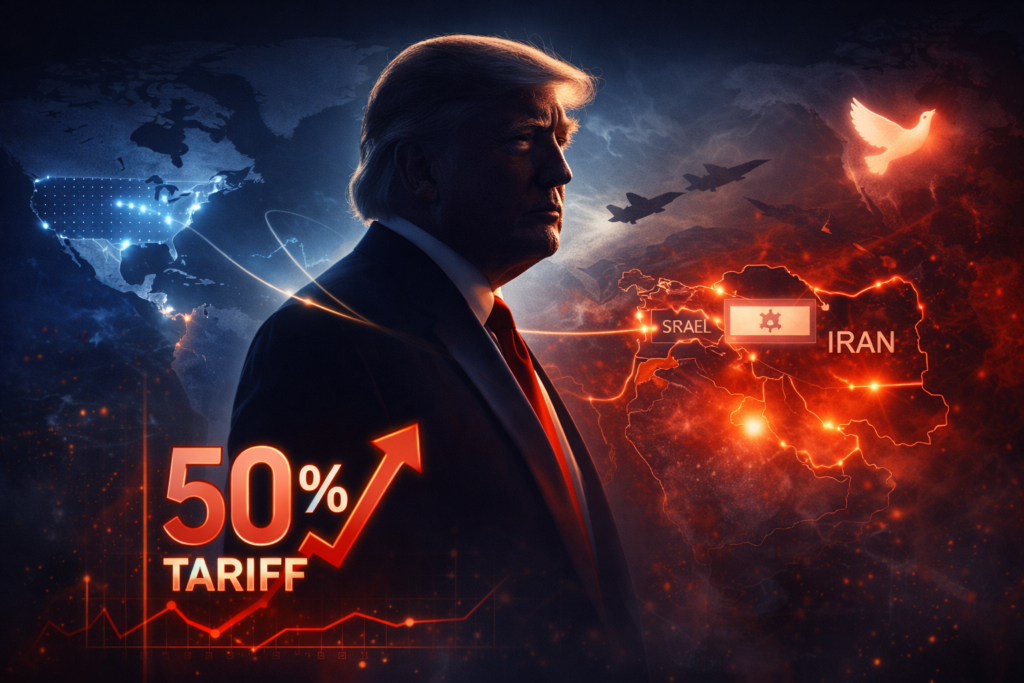
President Donald Trump just shook things up again. On April 8, 2026, he announced that any country supplying military weapons to Iran will face immediate 50% tariffs on all goods sold to the United States. No exemptions. No exceptions.
This move landed exactly one day after the U.S., Israel, and Iran agreed to a two-week ceasefire. The timing feels classic Trump—mixing diplomacy with a heavy economic stick, even as tensions remain high due to the ongoing war.
Quick Background: How We Got Here in 2026
The conflict escalated in late February 2026. U.S. and Israeli forces launched strikes that hammered Iran’s air defenses, weapons factories, and navy. Over five and a half weeks, they hit more than 13,000 targets. Iran fought back with missiles and drones, even targeting Gulf states and disrupting shipping through the Strait of Hormuz. Some Others Inernational Adventures Gift is Here.
Casualties mounted. Iran reported over 2,300 killed and 33,000 injured. The war strained global oil supplies and pushed energy prices higher—until today.
The Ceasefire Deal: What We Know So Far
Trump described Iran’s proposal as a “workable base” for talks. The two-week pause halts U.S. and Israeli strikes on Iran proper. In return, Iran agreed to safe passage through the Strait of Hormuz—the critical chokepoint for 20% of global oil and gas trade.
Pakistan played a big role in brokering the deal. Talks will continue in Islamabad as early as Friday. Trump even floated joint U.S.-Iran efforts to remove buried enriched uranium from earlier strikes. Iran has not publicly confirmed every detail, and versions of the agreement differ between the parties.
Still, markets loved the news. Oil prices plunged toward $90 a barrel. U.S. stocks surged, with the S&P 500 jumping 2.7%. Relief washed over traders who feared a wider energy crisis.
Trump’s Tariff Announcement: No Half Measures
Trump posted the news directly on Truth Social: “A Country supplying Military Weapons to Iran will be immediately tariffed, on any and all goods sold to the United States of America, 50%, effective immediately. There will be no exclusions or exemptions!”
He made the call just 24 hours after the ceasefire. The message is clear: the U.S. wants to choke off Iran’s weapons pipeline while the truce holds.
This builds on earlier 2026 moves. Trump had already threatened or imposed 25% tariffs on countries doing business with Iran in January and February. The new 50% rate targets military supplies specifically and hits harder.
Legal experts note the path might get murky—Supreme Court rulings have limited broad tariff powers before. But Trump frames it as national security, not trade policy.
Why This Move Makes Logical Sense (With a Dash of Trump Flair)
Think about it. Iran’s military took heavy hits. Its factories and fleet suffered major damage. Cutting off fresh weapons supplies gives the ceasefire time to breathe and forces Tehran to focus on talks instead of rearming.
Trump loves leverage. He turned a deadline into a deal, then used tariffs to protect it. As he put it during the war, nobody makes better deals than him. You almost have to chuckle at the sheer boldness—diplomacy one day, economic hammer the next.
At the same time, the logic holds. A rearmed Iran could restart hostilities the moment the two weeks end. This tariff wall aims to make that far more expensive for any supplier.
What It Means for Global Players and Everyday People
Countries that sell weapons to Iran now face a stark choice. Sell to Tehran and lose big access to the massive U.S. market, or stay on the sidelines.
For Americans, the policy could mean higher prices on imported goods from those nations—but it also signals strength against threats to energy security. For Iranians, the ceasefire brings cautious hope after weeks of strikes, yet economic damage lingers.
Gulf states watched nervously. They want unrestricted Hormuz passage without new Iranian fees. China and Russia, who vetoed a related UN resolution earlier, stayed quiet on the tariffs for now.
Looking Ahead: Will the Ceasefire Hold?
The next two weeks will test everything. U.S.-Iran talks in Pakistan could shape a longer peace. Israel continues operations against Hezbollah separately. Iran claims victory and says it forced the U.S. and Israel to the table.
Trump called it a “capital ‘V’ military victory” for the U.S. and Israel. He warned that if Iran slips, strikes could resume.
The world holds its breath. Oil markets calmed for now, but any violation could spike prices again. Diplomats from the UN and Pakistan push for calm. Even the Pope called the truce a sign of hope.
FAQ: Your Quick Questions Answered
Q: When did the US-Israel-Iran ceasefire start? A: The two-week ceasefire took effect on April 8, 2026, after Trump announced the deal the evening before.
Q: What exactly did Trump say about the 50% tariffs? A: He posted that any country supplying military weapons to Iran faces 50% tariffs on all goods to the U.S., effective immediately, with zero exemptions.
Q: Does the ceasefire cover Israel’s actions in Lebanon? A: No, according to Israel and Trump. The deal focuses on Iran. Fighting against Hezbollah continues.
Q: How has the war affected oil prices? A: Pre-ceasefire spikes hurt consumers worldwide. The truce sent prices tumbling toward $90 a barrel as Hormuz fears eased.
Q: What happens after two weeks? A: Negotiators aim for a permanent deal. Trump linked sanctions relief and uranium removal to success.

Ghananand is the Founder & Chief Editor of NewzStrome. Hailing from Prayagraj, Uttar Pradesh, he brings 1.5 years of hands-on experience in journalism and digital media. He delivers sharp, unbiased, and timely news from India and across the globe. Passionate about investigative reporting, technology, politics, and lifestyle, Ghananand is committed to bringing readers nothing but the truth