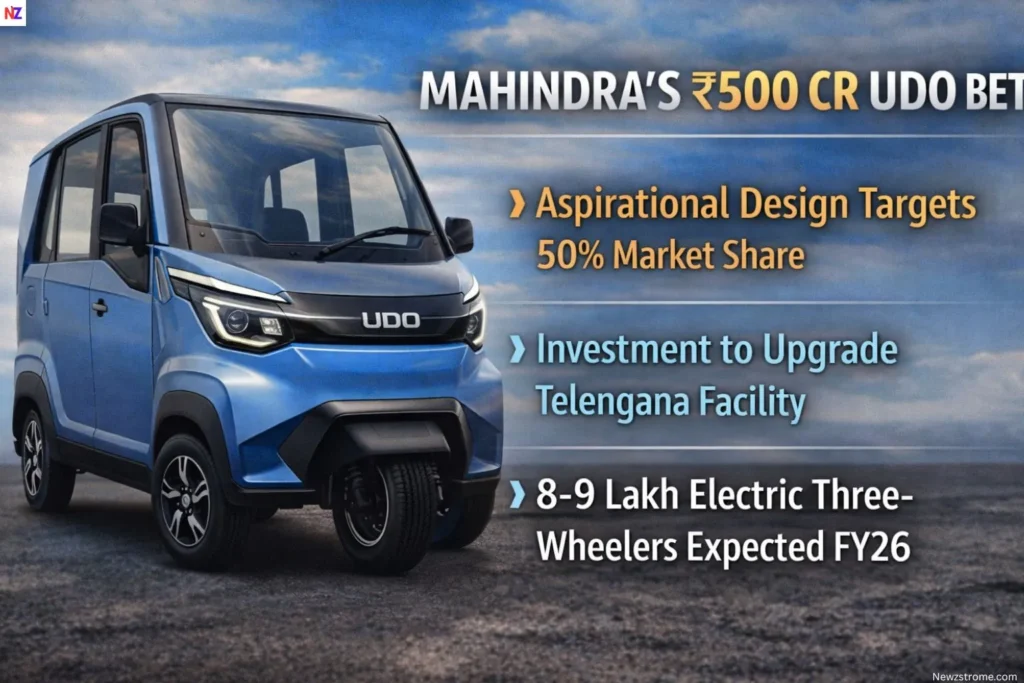
India’s electric mobility landscape is evolving fast, and the launch of the new UDO platform signals a potential turning point for commercial electric vehicles. Backed by a ₹500 crore investment, the new offering from Mahindra & Mahindra aims to transform how electric three-wheelers are perceived — shifting them from purely functional vehicles to aspirational mobility solutions.
A Fresh Approach to Electric Three-Wheeler Design
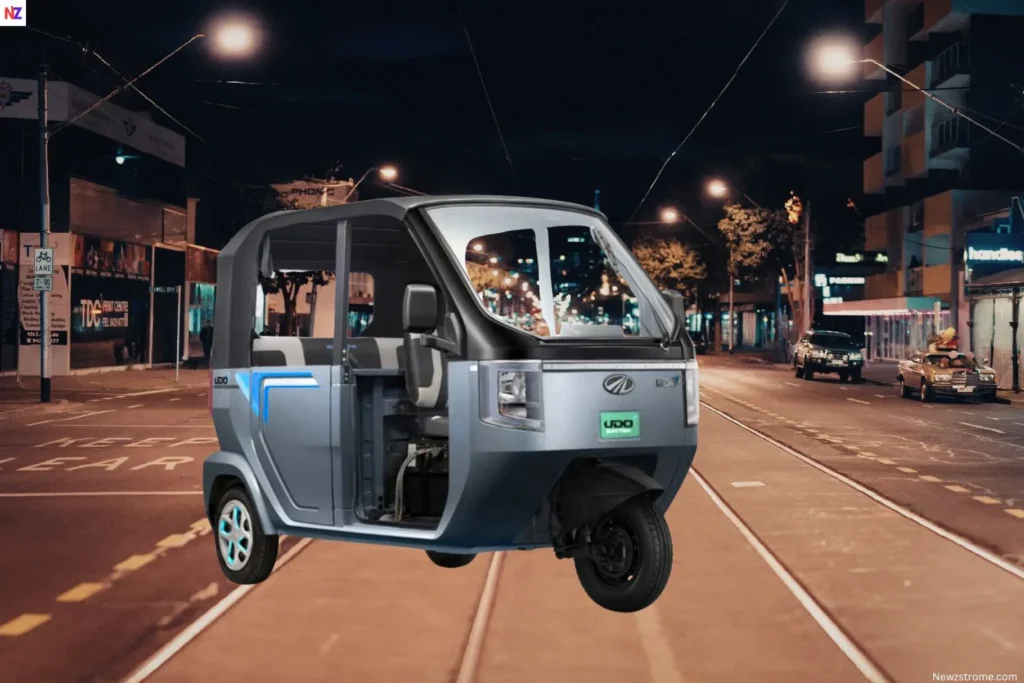
The UDO has been built from the ground up as an electric L5 category platform. Unlike traditional three-wheelers that largely focus on affordability and operational efficiency, this new model introduces a design philosophy centred around user comfort, visual appeal, and advanced engineering.
According to Chief Design & Creative Officer Pratap Bose, the design team explored the concept of an “SUV-like” experience for electric three-wheelers. The idea is to deliver a vehicle that drivers can take pride in owning, rather than viewing it simply as a tool for daily earnings.
To achieve this, the company developed the ‘IntelliCore’ design philosophy, which places intelligence and user-focused innovation at the heart of vehicle development. The process reportedly involved more than two years of research and between 1,000 and 1,500 design sketches before finalising the production-ready concept. This long development cycle highlights the company’s intent to create a differentiated product rather than just another addition to the existing lineup.
Ambitious Market Share Expansion Plans
Currently holding a significant share of India’s electric three-wheeler market, the company is now targeting a sharp rise in its presence. Managing Director and CEO Suman Mishra believes the brand can increase its market share to nearly 50 percent within the next two to three years.
This confidence stems from the growing shift toward electrification across India’s public and commercial transport sectors. A major portion of conventional auto-rickshaws still relies on CNG, which accounts for nearly 70 percent of internal combustion engine (ICE) three-wheelers. As electric infrastructure expands and running costs continue to favour EVs, industry experts expect a steady transition from CNG-powered vehicles to electric alternatives.
The company also aims to reposition the segment from what it calls “survival economics” — where drivers focus purely on operational affordability — to “aspiration economics,” where vehicle design, comfort, and status become important purchasing factors.
Strengthening Manufacturing and Infrastructure
Beyond product development, the company is also expanding its manufacturing footprint. A significant portion of the planned investment is being directed toward expansion efforts in Telangana. This includes upgrading facilities at the Zaheerabad plant, where production automation, robot-assisted assembly lines, and advanced battery manufacturing systems are being introduced.
The upgraded facility is expected to have an annual production capacity of up to 2 lakh vehicles, which will help the company meet rising demand as electric adoption accelerates. Investing early in manufacturing capacity also positions the company to respond quickly to future market growth.
Industry Growth Signals Strong Demand
The broader electric three-wheeler segment is witnessing rapid expansion across India. Industry estimates suggest that combined sales of electric rickshaws and L5-category vehicles could cross 9 lakh units by the end of the current fiscal year. Within this, the L5 segment alone is projected to reach nearly 8 lakh units in FY26.
These figures highlight the increasing demand for affordable yet technologically advanced last-mile transport solutions. Urbanisation, rising fuel prices, and government incentives are playing major roles in accelerating EV adoption across passenger and cargo segments.
A Potential Game-Changer for Last-Mile Mobility
The introduction of the UDO reflects a broader shift in India’s commercial EV sector, where manufacturers are no longer focusing solely on cost efficiency. Instead, companies are exploring ways to enhance driver experience, vehicle reliability, and overall brand appeal.
If the platform succeeds in balancing affordability with premium design and performance, it could redefine expectations in the electric three-wheeler category. With strong investment backing, upgraded manufacturing capabilities, and growing market demand, the UDO may well represent the beginning of a more aspirational phase in India’s last-mile mobility transformation.

Ghananand is the Founder & Chief Editor of NewzStrome. Hailing from Prayagraj, Uttar Pradesh, he brings 1.5 years of hands-on experience in journalism and digital media. He delivers sharp, unbiased, and timely news from India and across the globe. Passionate about investigative reporting, technology, politics, and lifestyle, Ghananand is committed to bringing readers nothing but the truth