One of the most talked-about issues among Indian central government employees is the 8th Pay Commission. As millions wait for clarity on wage revision, fitment factor, allowances, and the estimated implementation timetable, we present a complete and detailed report on everything you need to know right now. Anticipation is at an all-time high due to ongoing discussions, professional opinions, and employee unions advocating for early implementation.
In this post, we break down the latest events, government pronouncements, predicted benefits, pay matrix adjustments, pension amendments, and what employees may realistically expect from the upcoming pay commission.
What Is the 8th Pay Commission? A Quick Overview
The 8th Pay Commission (8th CPC) is expected to modify the wage, pension, and allowances of central government employees and pensioners. The seventh CPC was established in 2016. Pay Commissions are typically established every ten years. The eighth CPC should go into effect on January 1, 2026, if the current trend persists.
However, with rising inflation and pressure from labor unions, many anticipate that the government may either disclose it earlier or implement an alternate salary revision scheme.
Latest Government Update on the 8th Pay Commission
Although there is no official notification regarding the formation of the 8th Pay Commission, various developments show that discussions are active:
1. Government Yet to Make a Formal Announcement
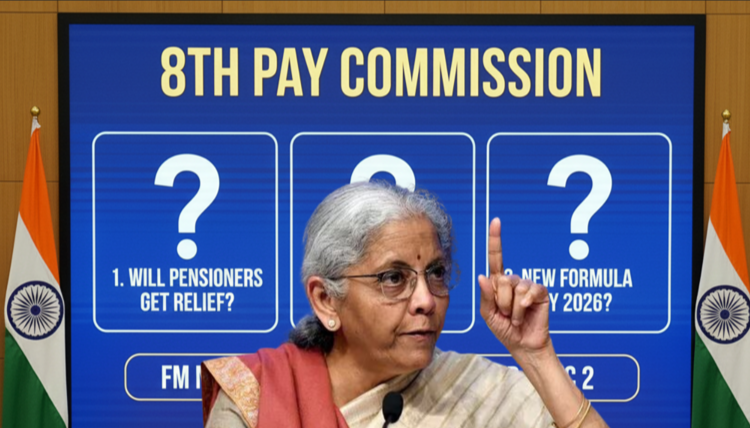
The central government has not formally confirmed the creation of the 8th CPC. Ministers have stated, however, that before making a choice, the government is considering employee demands, inflation, and the state of the economy.
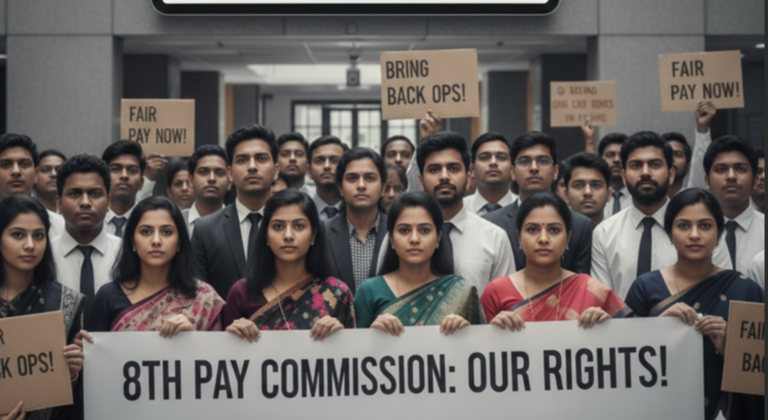
2. Employee Unions Demand Early Implementation
The 8th Pay Commission should be implemented as soon as possible, according to major central government employee unions, citing:
Rising cost of living
High inflation
Unchanging pay scale
An increase in central departments’ workload
3. Fitment Factor Revision Under Review
According to media sources and expert research, debates on a fitting factor modification are gaining support. Workers are calling for a raise from 2.57 to 3.68, which might result in a large pay increase.
Possible Implementation Date for the 8th Pay Commission
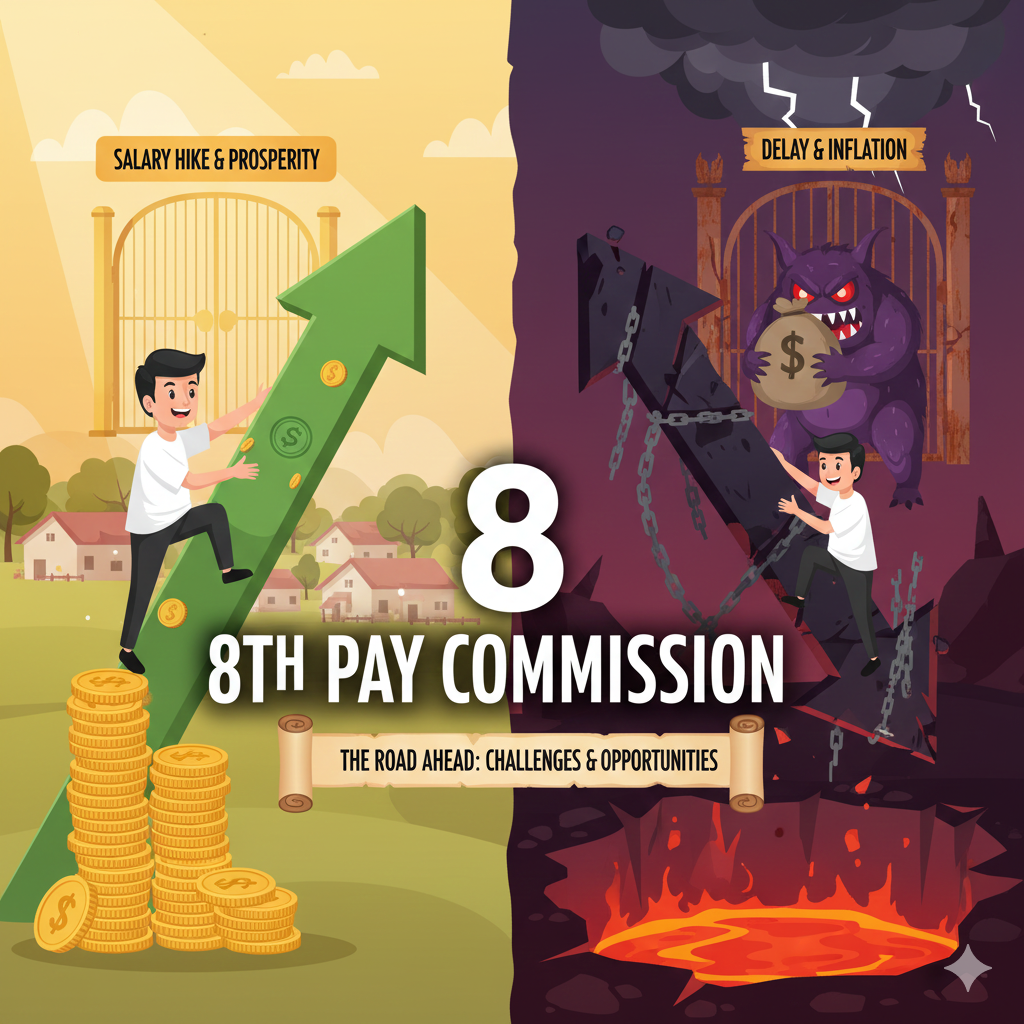
If the regular 10-year cycle continues, the expected implementation date would be:
🎯 1st January 2026
However, sources indicate that the administration might take into account the following in light of mounting union pressure and inflation issues:
2025 early announcement
Phased implementation
A modified pay revision process instead of the conventional commission
Expected Salary Hike Under the 8th Pay Commission

One of the greatest attractions of the 8th CPC is the predicted compensation hike for central government personnel. Here is what is anticipated based on pay structure study and current inflation trends:
1. Fitment Factor
The basic wage increase is determined by the fitting factor.
Current Fitment Factor (7th CPC): 2.57
Expected Fitment Factor (8th CPC): 3.68
The minimum salary could rise from ₹18,000 to ₹26,000–₹28,000 per month as a result.
2. Revised Pay Matrix
A thorough reform of the compensation matrix is expected, including new entry pay and promotional pay levels.
3. Modifications to Allowances
It is probable that the following allowances will be examined:
HRA (House Rent Allowance)
TA (Travel Allowance)
DA (Dearness Allowance)
Medical & Risk Allowances
Expected Pension Revision Under 8th CPC
Central government pensioners are also anticipated to receive large benefits.
Important Expected Shifts for Retirees
A greater fitment factor leads to an increased base pension.
Updated rates for commuting
Enhanced alleviation advantages
Streamlined medical claim system
The rising inflation has considerably affected retirees, making 8th CPC benefits important for their financial stability.
How Much Salary Will Increase? Example Calculation
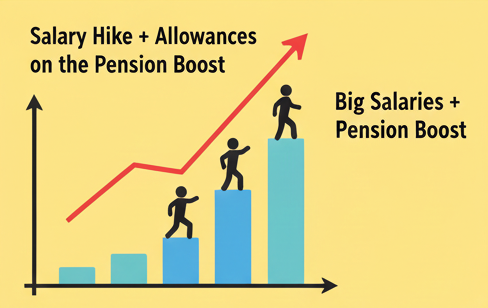
To assist employees comprehend the prospective consequences, here’s an example:
If ₹30,500 is the current basic pay
30,500 × 2.57 equals ₹78,385 under the seventh CPC Fitment Factor
Under Expected 8th CPC Fitment Factor: 30,500 × 3.68 = ₹112,240
➡️ Approx Salary Increase: ₹33,000+ (Basic Pay only)
Total salary with allowances may increase by ₹40,000 to ₹50,000 per month depending on grade.
Why Employees Want the 8th Pay Commission Early
There has been speculation that the government may discontinue the traditional pay commission format. However, experts believe:
India still requires a structured pay revision system
Economic changes make periodic revision essential
Employees depend heavily on predictable wage growth
Therefore, even if the 8th CPC introduces a new model, salary revisions will continue in some form.
Will the 8th Pay Commission Be the Final Pay Commission?
There have been rumors that the government would stop using the conventional pay commission structure. But experts think:
India still needs a systematic approach to wage revision.
Economic changes make frequent review vital
Workers rely significantly on steady pay increases.
Therefore, even if the 8th CPC presents a new model, compensation modifications will continue in some form.
What Employees Should Expect Next
In the upcoming months, we can anticipate:
The Finance Ministry’s official announcements
Potential creation of a committee in 2025
DA (Dearness Allowance) increases running up to 2026
Increased public discourse in the upcoming general election
Employee unions are preparing additional meetings to urge for rapid adoption.
Conclusion
For Indian central government workers and retirees, the 8th Pay Commission is expected to represent a major turning point. Expectations for a significant pay and pension reform are high due to growing budgetary needs and union pressure. While the government has not given an official timeframe, indicators suggest that negotiations are occurring and employees may soon get substantial changes.
Staying informed is essential to comprehending the financial future of millions of government workers as we continue to keep an eye on all events.

Ghananand is the Founder & Chief Editor of NewzStrome. Hailing from Prayagraj, Uttar Pradesh, he brings 1.5 years of hands-on experience in journalism and digital media. He delivers sharp, unbiased, and timely news from India and across the globe. Passionate about investigative reporting, technology, politics, and lifestyle, Ghananand is committed to bringing readers nothing but the truth