
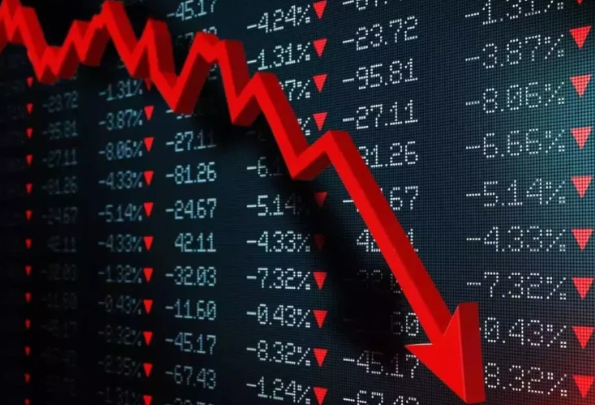
Indian equity markets extended their losing streak for a second straight session on Tuesday, January 20, with benchmark indices witnessing sharp declines amid weak global cues, sustained foreign fund outflows, and heightened volatility. The Sensex fell more than 600 points intraday, while the Nifty 50 slipped below the crucial 25,400 mark for the first time since November 2025, reflecting growing risk aversion among investors.
By mid-afternoon, selling pressure intensified across the board, dragging all sectoral indices into negative territory. Broader markets also remained under stress, with mid- and small-cap stocks underperforming the frontline indices, signalling cautious sentiment and limited appetite for high-valuation stocks.
Global Trade Concerns Weigh on Sentiment
Market sentiment was dampened by escalating global trade uncertainties, particularly after renewed tariff threats from US President Donald Trump. European markets reacted negatively as fears of a potential trade war resurfaced, with the STOXX 600 index sliding further following its sharp decline a day earlier. The uncertainty spilled over into Asian markets, adding pressure on Indian equities already grappling with domestic headwinds.
Foreign portfolio investors (FPIs) continued to remain net sellers, exerting pressure on equities and the rupee. The Indian currency slipped past the 91 mark against the US dollar, reflecting capital outflows and risk-off sentiment amid global instability.
Volatility Rises, Technical Levels Break
The India VIX, a key gauge of market volatility, jumped over 5 percent to hover near a two-month high, indicating rising nervousness among traders. Technically, the breach of the 25,400 level on the Nifty and the Nifty Midcap 100 falling below its 100-day moving average further weakened market structure, prompting short-term traders to avoid aggressive positions.
Realty stocks bore the brunt of the sell-off, with the sectoral index plunging over 3.5 percent. IT stocks also remained under pressure due to global growth concerns and currency volatility, while FMCG and other defensive sectors failed to provide meaningful support.
Stock-Specific Action Remains Mixed
Despite the broader weakness, a few stocks witnessed isolated action. Bajaj Electricals shares surged up to 11 percent after the company announced its entry into the wires segment, aiming to diversify its revenue base amid rising demand. The move boosted investor confidence, even as competitor stocks declined.
On the downside, Ola Electric Mobility shares extended their losing streak for the 10th consecutive session, falling nearly 7 percent after the resignation of its chief financial officer. The stock has now declined around 25 percent over the last ten sessions, reflecting mounting concerns over management stability and execution challenges.
Meanwhile, Reliance Industries and Eternal emerged as major drags on the Sensex, contributing significantly to the index’s sharp fall. Realty majors such as Oberoi Realty and Aditya Birla Real Estate also featured among the top losers.
Earnings Season in Focus
Amid the volatility, investor attention remained fixed on the ongoing December-quarter earnings season. ITC Hotels reported a healthy performance, with consolidated profit rising 9.3 percent year-on-year to Rs 235 crore, while revenue jumped 21.3 percent to Rs 1,231 crore, offering some relief in an otherwise weak session.
Eternal’s Q3 results are also closely tracked, with brokerages expecting strong revenue growth supported by Blinkit’s business model transition, although profitability concerns persist.
Outlook Remains Cautious
With global trade tensions, FPI selling, currency weakness, and rising volatility converging, market sentiment remains fragile in the near term. Analysts believe the Nifty’s ability to hold above key support zones will be critical, while stock-specific opportunities may continue to dominate trading activity during the earnings season.
Until clarity emerges on global cues and capital flows, traders are expected to stay defensive, focusing on quality stocks with strong fundamentals rather than chasing short-term rebounds.

Ghananand is the Founder & Chief Editor of NewzStrome. Hailing from Prayagraj, Uttar Pradesh, he brings 1.5 years of hands-on experience in journalism and digital media. He delivers sharp, unbiased, and timely news from India and across the globe. Passionate about investigative reporting, technology, politics, and lifestyle, Ghananand is committed to bringing readers nothing but the truth