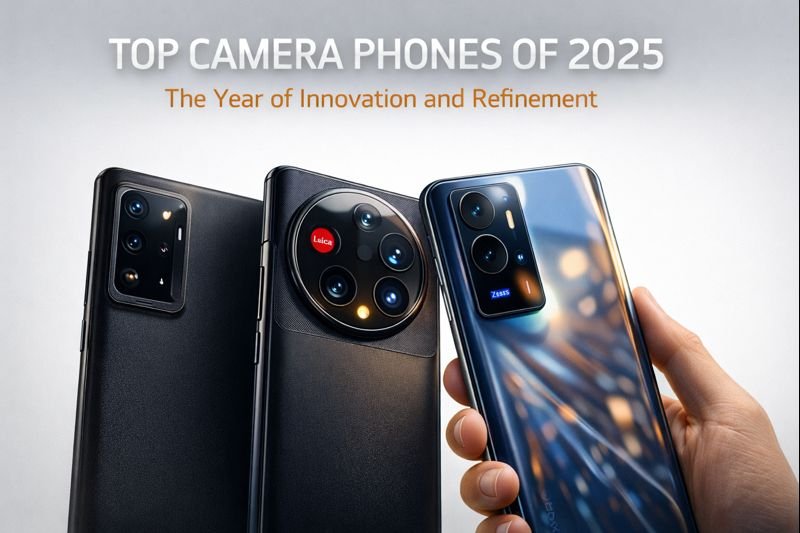
Smartphone photography has always been one of the most competitive battlegrounds in the mobile industry, and 2025 proved to be no different. This year was packed with innovation, refinement, and bold experimentation. Some manufacturers pushed the boundaries of hardware, while others polished their existing setups to deliver more consistent results. The end result? Nearly every major brand had something noteworthy to offer in the camera department.
From Chinese giants like vivo, Oppo, Xiaomi, and Honor, to global staples like Apple, Samsung, and Google, the race for the best camera phone of 2025 was fierce. Let’s take a closer look at the standout devices that defined smartphone photography this year.
Vivo: Leading the Pack with the X Series
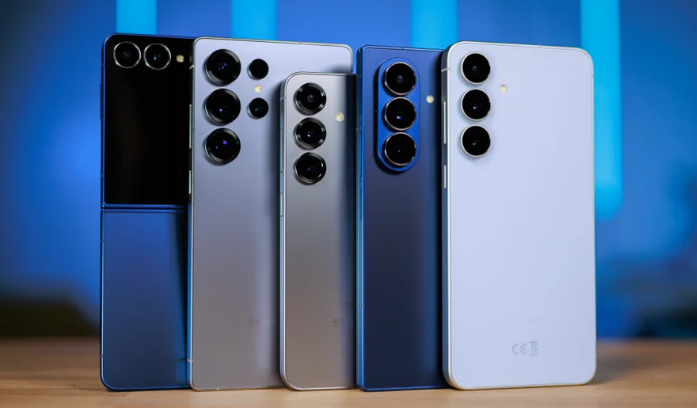
If there’s one brand that truly stole the spotlight in 2025, it’s vivo. The company kicked off the year with the China-exclusive vivo X200 Ultra, a device that showcased cutting-edge imaging technology. But the real global impact came later in the year with the launch of the vivo X300 and X300 Pro.
- The X300 Pro didn’t reinvent the wheel in terms of hardware, but it refined the formula beautifully. Its potent camera setup delivered consistently excellent results, while the improved selfie camera made it one of the most complete packages for photography enthusiasts.
- Vivo’s focus on balancing hardware with software optimization ensured that the X300 Pro remained one of the most desirable cameraphones worldwide.
In short, vivo proved once again that it knows how to lead the conversation when it comes to mobile photography.
Oppo: Flagship Excellence with the Find X Series
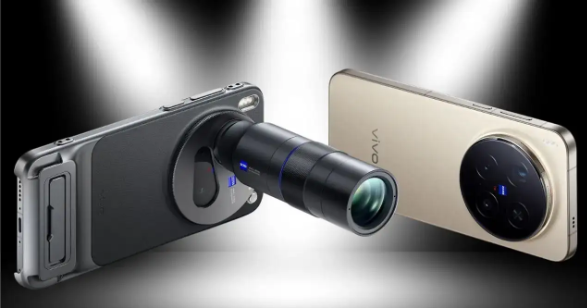
Oppo continued to impress in 2025 with its Find X8 Ultra and Find X9 Pro.
- The Find X8 Ultra, available in China, was the company’s most advanced shooter yet, boasting large sensors and excellent low-light performance.
- For global markets, Oppo introduced the Find X9 Pro, a toned-down but still powerful version of its flagship. This model brought substantial upgrades over last year’s Find X8 Pro, particularly in the main, telephoto, and selfie cameras. Bigger sensors meant sharper details, better dynamic range, and improved portrait shots.
For anyone outside China, the Find X9 Pro was the go-to Oppo flagship if you wanted a premium camera experience without compromise.
Xiaomi: Versatility with the 15 Ultra
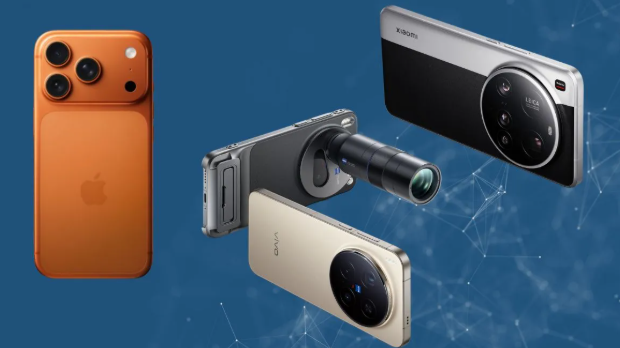
Xiaomi’s 15 Ultra was a major highlight in 2025, and unlike some of its competitors, it was made available worldwide.
The phone impressed with its dual telephoto camera setup, which provided a high level of flexibility.
Its 1-inch main sensor along with a 200MP telephoto lens produced some of the clearest and most detailed photos in the industry.
Xiaomi’s strategy was to give users more choices when capturing the perfect image, whether it was wide-angle landscapes, detailed zoom shots, or sharp portraits.
Even though the Xiaomi 17 Ultra came later in the year, the 15 Ultra remained one of the most well-rounded and versatile camera phones of 2025.
Honor: Magic7 Pro Holds the Fort
While fans eagerly await the Honor Magic8 Pro in 2026, this year’s Magic7 Pro carried the torch.
- At its core was Samsung’s notorious 200MP sensor, paired with a 3x telephoto lens.
- This combination allowed Honor to deliver excellent stills, with sharp details and vibrant colors.
The Magic7 Pro may not have been the most revolutionary device, but it represented Honor’s best effort yet in mobile photography, keeping the brand competitive in a crowded market.
Nubia: The Portrait Specialist
One of the most surprising entries this year was the nubia Z80 Ultra. Unlike most flagships that focus on versatility, Nubia carved a niche by emphasizing portrait photography.
- Its main sensor featured a 35mm equivalent focal length, making it ideal for natural-looking portraits.
- The rest of the hardware was solid too, ensuring that it wasn’t just a one-trick pony.
For users who love capturing people and moments with a professional touch, the Z80 Ultra was a refreshing alternative to the mainstream giants.
Realme: A New Challenger with the GT 8 Pro
Realme has traditionally focused on performance, design, and fast charging, often leaving cameras as an afterthought. But 2025 marked a turning point with the Realme GT 8 Pro.
- The ultrawide camera received a major upgrade, delivering sharper and more vibrant shots.
- The telephoto unit joined the 200MP trend, offering impressive zoom capabilities.
For the first time, a Realme flagship felt like it could genuinely challenge the big players in the camera arena. This shift showed Realme’s ambition to be taken seriously as a photography brand.
Huawei: Innovation with the Pura 80 Ultra
Huawei continued to raise the bar in smartphone photography with the Pura 80 Ultra, particularly in the telephoto department. This device introduced one of the largest zoom sensors ever seen on a phone, paired with a dual-lens setup that gave users remarkable flexibility.
One lens delivered a crisp 3.7x optical zoom, while the second lens extended the reach to an impressive 9.4x, making it possible to capture everything from close-up details to distant subjects with ease. When combined with the phone’s 1-inch main sensor and a highly capable ultrawide camera, the Pura 80 Ultra stood out as one of the most advanced imaging systems of the year.
Huawei’s bold engineering choices ensured that the Pura 80 Ultra wasn’t just another incremental upgrade. In a market where many rivals focused on small refinements, this phone distinguished itself with genuine innovation, cementing its place as one of the most memorable camera flagships of 2025.
Global Staples: Apple, Samsung, and Google
Of course, no list would be complete without mentioning the global heavyweights: Apple, Samsung, and Google.
- The iPhone 17 Pro and 17 Pro Max may not have introduced groundbreaking hardware, but they remained the kings of video recording. Apple’s mastery of video quality and feature-packed software made them the go-to choice for content creators.
- Samsung’s Galaxy S25 Ultra continued to deliver reliable performance, with excellent stills and strong zoom capabilities.
- Google’s Pixel 10 Pro and Pro XL leaned heavily on computational photography, producing consistently beautiful images with minimal effort from the user.
These phones may not have been the most innovative in 2025, but they offered consistency, reliability, and global availability — qualities that many users value above experimental features.
Video Excellence: Apple’s Unmatched Strength
While many smartphone makers in 2025 directed their efforts toward improving still photography, Apple chose a different path by doubling down on video. The iPhone 17 Pro series quickly became the benchmark for mobile videography, offering an unmatched blend of clarity, color accuracy, and professional-grade features. With tools like cinematic mode and advanced stabilization, Apple gave creators the ability to shoot footage that looked polished straight out of the phone. For vloggers, independent filmmakers, and social media storytellers, the iPhone wasn’t just another option—it remained the most trusted companion for capturing high-quality video content on the go.
Looking Ahead to 2026
As we move into 2026, the expectations are clear:
- Samsung and Apple need to step up their game in still photography to compete with the aggressive innovation coming from Chinese brands.
- Chinese manufacturers like vivo, Oppo, Xiaomi, and Huawei are expected to keep pushing the envelope, experimenting with larger sensors, higher megapixel counts, and unique focal lengths.
The competition is only going to get tougher, and that’s great news for consumers. More innovation means better cameras, more versatile features, and ultimately, more ways to capture life’s moments beautifully.
Final Thoughts
2025 was a landmark year for smartphone cameras. From vivo’s dominance with the X300 Pro, Oppo’s refined Find X9 Pro, Xiaomi’s versatile 15 Ultra, Honor’s Magic7 Pro, Nubia’s portrait-focused Z80 Ultra, Realme’s surprising GT 8 Pro, Huawei’s groundbreaking Pura 80 Ultra, to the reliable offerings from Apple, Samsung, and Google — every brand had something unique to offer.
Whether you’re a professional photographer, a casual user, or a content creator, 2025 gave you plenty of options to choose from. And with 2026 promising even more innovation, the future of smartphone photography looks brighter than ever.

Ghananand is the Founder & Chief Editor of NewzStrome. Hailing from Prayagraj, Uttar Pradesh, he brings 1.5 years of hands-on experience in journalism and digital media. He delivers sharp, unbiased, and timely news from India and across the globe. Passionate about investigative reporting, technology, politics, and lifestyle, Ghananand is committed to bringing readers nothing but the truth