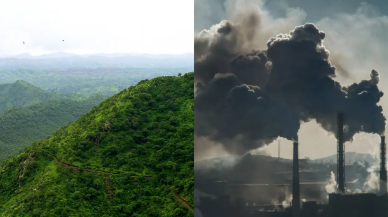
The Supreme Court has changed the rules for protecting the Aravalli hills. Now, only hills taller than 100 meters get strong protection. This leaves most of the lower Aravallis vulnerable.
People are protesting because these ancient hills stop the desert from spreading, recharge groundwater, and clean the air for north India. They fear the new rule will allow more mining and construction, destroying the ecology.
Activists and lawyers are demanding the government declare the entire Aravalli range a protected area to secure the future of the region.
The Core of the Controversy
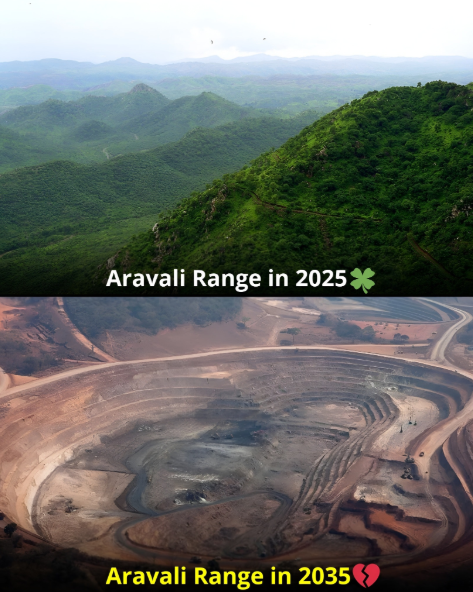
On November 20, 2025, the Supreme Court accepted a government committee’s recommendation to define the “Aravalli Hills” for regulatory purposes. According to the new rule, only landforms in designated districts with an elevation of 100 metres or more above the surrounding land qualify.
The government’s argument is that this brings clarity and uniformity to a region plagued by decades of legal disputes over land classification. The Court itself noted the need to balance ecology with economic realities, as mining in the area supports livelihoods and supplies construction materials.
The problem, as environmentalists and scientists loudly proclaim, is that this definition is ecologically blind. In Rajasthan, for instance, most of the Aravalli hills are between 30 and 80 metres tall. This means the vast majority of the range—its low-lying ridges, scrub forests, and grasslands—would suddenly lose the legal safeguards they previously enjoyed.
Why Losing the "Low" Hills is a Catastrophe
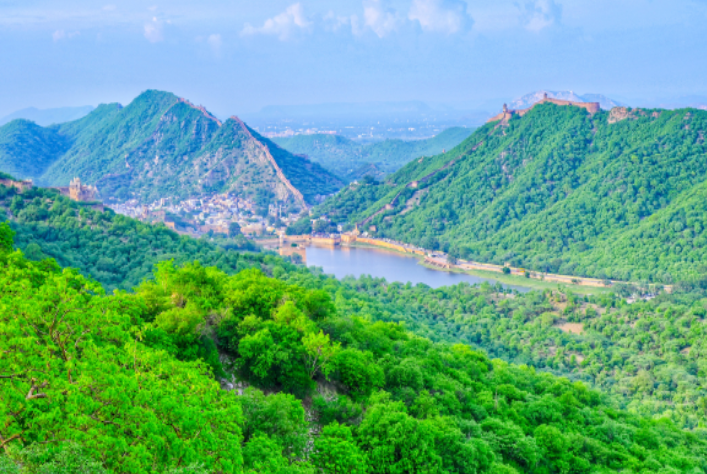
The outrage isn’t about scenery; it’s about survival. The Aravallis perform irreplaceable functions that have nothing to do with their height:
Experts warn that removing protection will lead to expanded mining and construction, causing irreversible damage. This could accelerate desertification, worsen Delhi’s air pollution by creating more dust breaches, and permanently destroy groundwater systems. As one activist starkly put it, the ruling could be a “death warrant” for the range.
The Rising Tide of Protest
The public response has been swift and cross-sectional, transforming from expert concern into a widespread people’s movement:
On the Streets: Peaceful protests have erupted in Haryana and Rajasthan. In Gurugram, activists gathered outside a minister’s residence with banners reading “Save Aravalli, Save the Future”. In Udaipur, lawyers marched from the court to the district office, arguing that protecting the Aravallis is synonymous with securing the future of Rajasthan.
In the Political Arena: The issue has become politically charged. Opposition leaders, including Congress’s Ashok Gehlot and SP’s Akhilesh Yadav, have strongly criticized the move, calling it contradictory to environmental pledges and warning of ecological disaster. The BJP has dismissed the criticism as misleading.
A Growing Campaign: The #SaveAravalli campaign is trending online, backed by an email petition aiming for 100,000 signatures to be delivered to 30 decision-makers. Rural communities are also joining, with plans for symbolic fasts, highlighting how tribal and farming livelihoods are directly tied to the hills’ health.
What Comes Next?
The Supreme Court’s order includes a crucial next step: a directive for the government to scientifically map the region and prepare a comprehensive management plan. For many, this mapping process is now the final hope. Environmentalists demand that it must consider hydrology, biodiversity, and wildlife corridors, not just elevation. They insist the maps and plans be made public and subject to independent review to prevent them from becoming a mere rubber stamp for exploitation.
Ultimately, the fight for the Aravallis is a stark test of modern India’s environmental governance. It pits a desire for regulatory clarity and economic activity against the complex, life-sustaining reality of an ancient ecosystem. The decisions made in the coming months will determine whether one of the world’s oldest mountain ranges is preserved as a common heritage or fragmented beyond repair.
Ghananand is the Founder & Chief Editor of NewzStrome. Hailing from Prayagraj, Uttar Pradesh, he brings 1.5 years of hands-on experience in journalism and digital media. He delivers sharp, unbiased, and timely news from India and across the globe. Passionate about investigative reporting, technology, politics, and lifestyle, Ghananand is committed to bringing readers nothing but the truth