It’s a big deal for India, and honestly, it’s a classic story of progress versus precaution. Imagine it like a family deciding to finally let trusted outsiders help run their very secure, very important family business. That’s essentially what’s happening with India’s nuclear power.
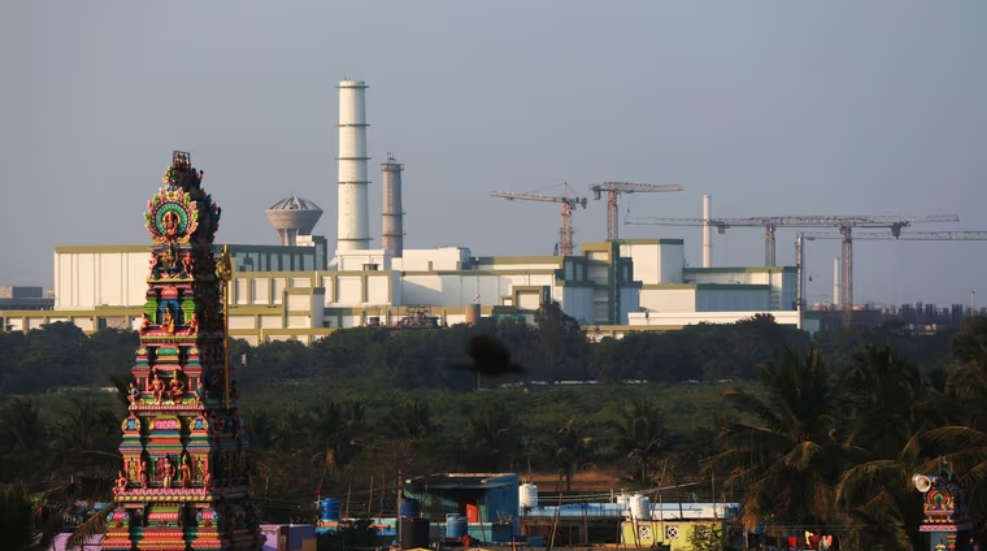
For decades, nuclear power in India was like a tightly guarded fortress, run entirely by the government. Think of it as a “government-only” club. The reason was simple: it’s incredibly powerful technology, with massive potential for both good (clean energy) and bad (safety risks, radioactive waste). The government felt it needed absolute control to ensure safety and national security.
But now, India has passed a bill saying, “Okay, private companies can come in and be part of this club.” The government is calling this bill the “Sustainable Harnessing.
Why is the Government Doing This? The "Pro" Side.

The government’s arguments are mainly about speed, clean energy, and global standing.
We Need Power, Fast: India is growing massively. More factories, more homes, more cities – all needing electricity. Right now, over 75% of India’s power comes from burning fossil fuels, mostly coal. This makes India one of the world’s biggest polluters. The government says, “We need a huge amount of clean power, and we need it yesterday.” Relying only on the government to build these complex, expensive nuclear plants is too slow. Letting in private companies with their money and efficiency could speed things up. Their goal is to have 100 gigawatts of nuclear power by 2047 – that’s enough for about 60 million homes!
Clean Energy Puzzle: Solar and wind are great, but they’re intermittent. The sun doesn’t always shine, the wind doesn’t always blow. Nuclear power provides a steady, “always-on” base of electricity that doesn’t pump carbon into the atmosphere. For a country trying to fight climate change while powering its growth, nuclear is seen as a crucial piece of the puzzle.
Playing in the Big Leagues: The world is taking a second look at nuclear energy, especially new, smaller, and potentially safer reactors (called Small Modular Reactors). India wants to be a leader in this next wave. By opening up the sector, they’re sending a signal to big global and domestic companies: “India is open for business in advanced nuclear tech.” As the minister said, if India wants to be a major global player, it needs to follow global trends and strategies.
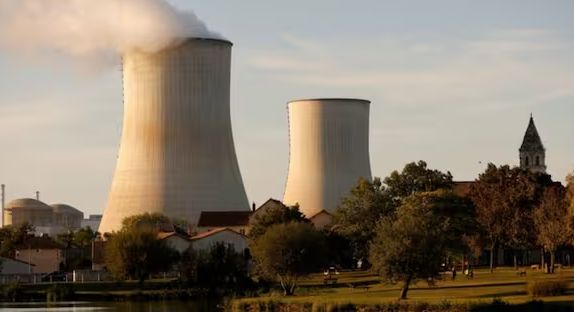
Why Are People Worried? The "Con" Side.
The opposition and activists aren’t convinced. Their fears boil down to safety, liability, and a lack of trust in profit-driven companies.
Safety Fears – “Profit vs. People”: This is the biggest one. Critics ask, “Will a private company, whose main duty is to make money for shareholders, cut corners on safety to save costs?” Unlike a manufacturing fire, a nuclear catastrophe can have catastrophic long-term health effects (such as cancer and birth problems) for generations and render large areas uninhabitable. They fear the new rules might “dilute” the very strict safety culture that the state-run sector had.
The Liability Ghost: There’s a nightmare scenario that haunts this debate: What happens if there is a major accident? Under older Indian laws, the responsibility to pay for damages (liability) ultimately rested heavily with the government and the plant operator. Critics like activist G. Sundarrajan argue this new bill is a “disastrous law” because it takes away essential safeguards. They fear it lets private companies off the hook, making it extremely difficult for ordinary citizens who get sick from radiation, or who lose their homes, to sue these companies for compensation. It’s like inviting someone to drive your car but making it almost impossible for them to be held fully responsible if they crash it.
Lack of Scrutiny: The opposition wanted the bill to be examined in detail by a cross-party parliamentary committee – a normal practice for complex laws. The government didn’t agree and pushed it through. This makes critics feel their concerns were brushed aside, adding to the feeling that the process was rushed.
The Bottom Line – A High-Stakes Gamble?
So, what’s really happening? India is at an energy crossroads. It’s making a calculated bet.
The government is betting that the urgent need for massive amounts of clean power outweighs the potential risks. They believe modern regulations can keep private companies in check, and that the benefits – less pollution, more energy independence, a seat at the global high-tech table – are too great to ignore.
The opposition and activists are betting that the government is underestimating the long-term dangers. They believe that with something as perilous as nuclear energy, “speed” and “private profit” are the wrong motivations. For them, the state’s primary job was protection, not fast-tracking growth in this particular field.
It’s a classic dilemma: Do you stick with the slow, cautious, state-controlled path knowing it might not meet your urgent goals? Or do you sprint forward with private partners, hoping your safety nets and regulations are strong enough to catch any fall?
The bill is now law. The private sector’s keys to the nuclear fortress are being cut. The coming years will show whether this move lights up India’s future cleanly and safely, or if the fears of its critics were justified. It’s one of the most significant, and controversial, energy decisions India has made in decades.

Ghananand is the Founder & Chief Editor of NewzStrome. Hailing from Prayagraj, Uttar Pradesh, he brings 1.5 years of hands-on experience in journalism and digital media. He delivers sharp, unbiased, and timely news from India and across the globe. Passionate about investigative reporting, technology, politics, and lifestyle, Ghananand is committed to bringing readers nothing but the truth